
ET Interview | The 11-year-old trader’s risk control rules: single stop loss + intraday circuit breaker + position lockout
- 2026年4月9日
- Posted by: Eagletrader
- Category: News
Sun Jingpeng’s original intention in doing business was the same as that of most people – he wanted freedom. No need to clock in, no need to look at the boss’s face, just rely on your own judgment to make money in the market. In 2015, he plunged into the stock market with this idea, and later switched to foreign exchange. In the rise and fall of the K-line, he was looking for the sense of control that “you have the final say in your own life.”
But after chatting for less than ten minutes, you will find an interesting contrast: the words that this trader who comes for freedom say the most are not “profit” or “double”, but “stop loss”, “discipline” and “must be implemented”.
It took him 11 years to understand: In the world of trading, freedom without discipline cannot go far at all.
What should you do if you make a mistake in trading?
In Sun Jingpeng’s trading system, technical analysis accounts for 70% of the weight. He believes that the core of technical analysis is direction judgment. He only trades in markets with clear trends, because only in this kind of market can there be clear room for entry and exit.
But technical analysis solves “what to do”. The more difficult question is: What should I do if I make a mistake?
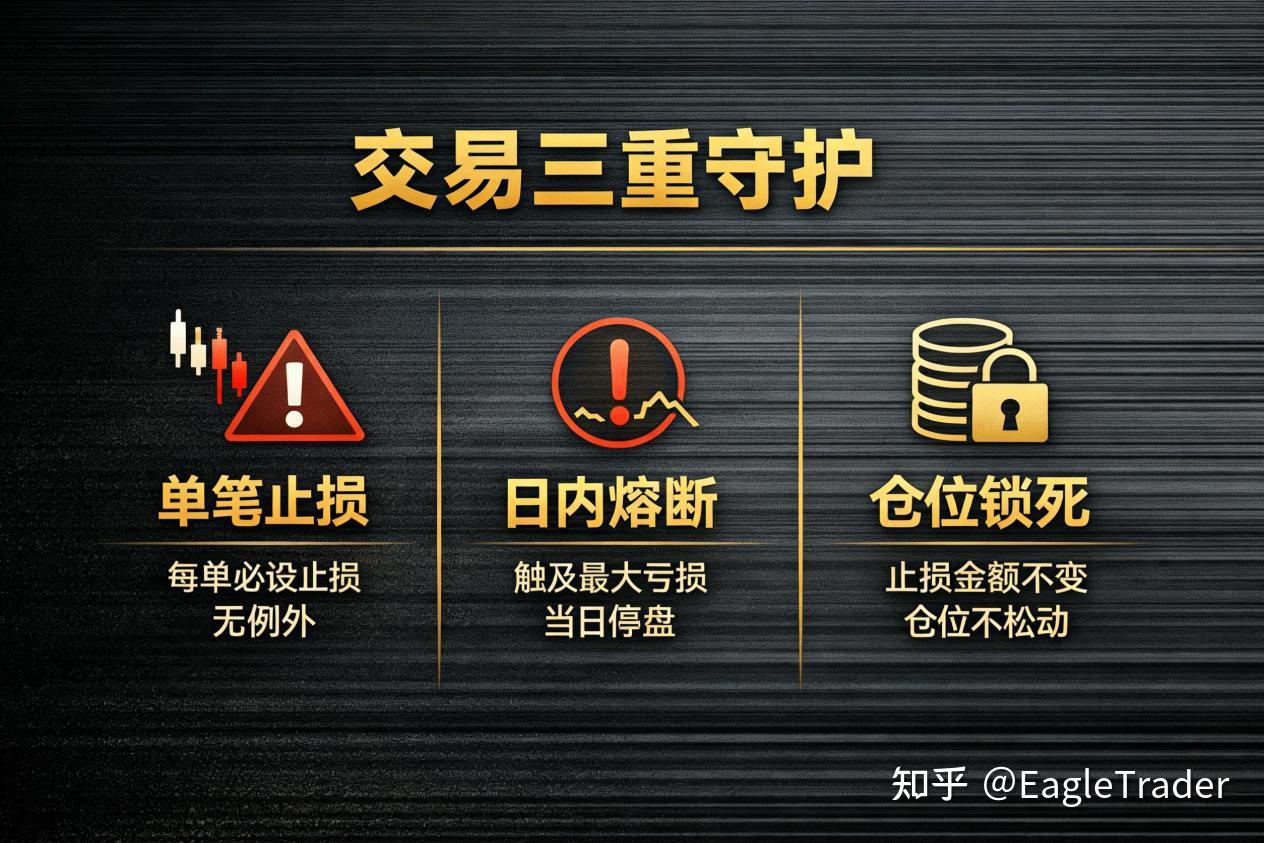
His idea is to stop the loss, and stop the loss strictly. Therefore, he set three levels of constraints on stop loss.
The first level: single stop loss. Every order must have a preset stop loss level, no exceptions.
The second level: intraday stop loss. Set a daily maximum loss limit, and once it is touched, trading will be stopped for that day. This rule does not adjust as market conditions change.
Level 3: The stop loss amount does not adjust with the position. His logic is: the upper limit of the stop loss amount is determined by the standard when the position is heavy. A lighter position does not mean that you can bear more losses.
During the position retracement, he still only looks at one thing: whether the trend has been destroyed. If the trend is there, continue to take; if the trend is not there, clear the position immediately. The basis for judgment is always the trend itself, not the profit and loss changes of the account.
So he said: “There is no shortage of opportunities in the financial market. Exit gracefully, preserve the principal, and preserve the opportunity to make a comeback.”
Look at the gap between being right and making money
Technical analysis determines the timing of entry, and what to do if the stop loss solution is wrong. But between the two, there is another question: rightWhat should I do?
Sun Jingpeng’s answer is: hold it. “Once you are sure of a direction, you must be able to hold the order, so that even if the position is not high, you can still make considerable profits.”
It is a common problem for most traders to look at the opposite direction but leave the market midway. There are two reasons: lack of confidence, or being distracted by the noise.
The root cause of lack of confidence is that the judgment itself is not certain enough. Sun Jingpeng believes that this requires “a long period of watching the market to form a more accurate judgment ability.”
The solution to noise interference is more direct: filtering. “Don’t be too affected by some messy news.”
Judgment supports confidence, and confidence supports positions. There is no need to hold heavy positions. If you hold on to the trend with light positions, you can still accumulate considerable profits.
Trading discipline comes from losses
Sun Jingpeng was not so calm from the beginning. Since entering the foreign exchange industry, he has liquidated his position dozens of times.
The amount is small at first, 100 US dollars, and can reach thousands of US dollars at most. The pain is not strong. But when the accumulated losses became larger and larger, and the return of capital was far away, the situation changed.
“I was very anxious and often suffered from insomnia. I suddenly got up in the middle of the night to read the market, and I felt irritable and depressed during the day.” This state lasted for several years before relieving.
Now, every calm conclusion he makes about risk control was earned through these nights. Discipline is not natural for him. Insomnia, irritability, anxiety – these are his real tuition fees.
Reapions from participating in proprietary trading
Sun Jingpeng’s biggest gain from participating in the assessment is risk control: “It has strengthened my execution ability in risk control. When I do it myself, I am usually more unorganized, and risk control is weaker than the platform.”
And before the assessment, there was always a layer between knowing the theory and doing it. The forced constraints of the platform have broken through this layer of things.
He already understands risk control, but he is always lax when executing it. The rigid requirements of the assessment system make up for this last link.
At the end of the interview, he also gave some sincere advice to newcomers: “Trading is a road to purgatory. It seems easy, but in fact it is very difficult. It is not easy to make a profit, and it is even harder to make a stable profit. It requires a very strong psychological quality, day and night market analysis, and strict risk control, so that we can hope to continue.”
In eleven years, dozens of liquidations and countless sleepless nights. The freedom he wanted turned out to be like this. Fortunately, he slowly saw his own hope.
If you also want to test your trading system in a more binding environment, or are concerned about EagleTrader’s assessment mechanism, you can learn more details through private messages! Perhaps, this will be a starting point for changes in your trading structure.