
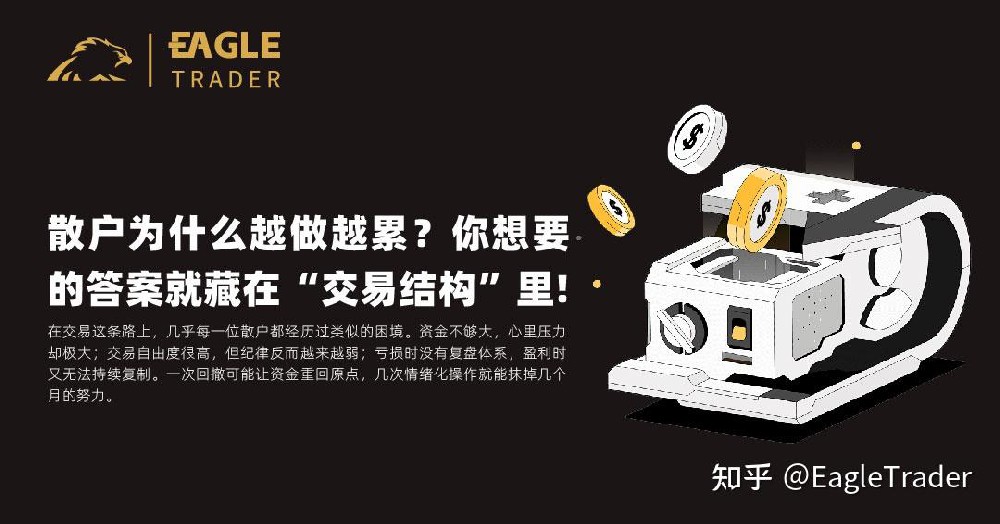
Why do retail investors become more tired as they trade? The answer you want is hidden in the “transaction structure”
- 2025年11月27日
- Posted by: Eagletrader
- Category: News
On the road of trading, almost every retail investor has experienced similar difficulties. The funds are not large enough, but the psychological pressure is great; the degree of trading freedom is high, but the discipline is getting weaker and weaker; there is no review system when losing money, and it is impossible to continue to copy when making profits. A retracement may bring funds back to the starting point, and a few emotional operations can erase months of hard work.
It’s not that retail investors don’t work hard, but it’s too easy to “work hard in the wrong structure.” Many traders have two types of problems that are the most common and most difficult to solve by “personal will”: one is financial problems, and the other is discipline problems. These two things are the fundamental factors that determine whether a trader can go far.
The problem of retail investors has never been “not good enough technology”
1. The dilemma of small funds
Most retail investors start with small funds. This means: a 3% retracement is not a number, it is pressure. If you lose a trade, you have to adjust your mentality for a long time. If you want to make a big cycle, you have to work hard in the short term. It is difficult for small funds to withstand systematic trial and error, and it is also more difficult to remain patient. This is not because retail investors don’t want to do well, but because they don’t have enough confidence.
2. Excessive freedom leads to “undisciplined trap”
There is no assessment or system for retail trading, and no one tells you “this won’t work.” It seems easy, but in fact:
Too free → too casual
Too casual → too many subjective judgments
Too much subjective judgment → execution is getting worse
The trading plan is well written, but when it is actually executed, as long as the market moves “like it is about to reverse”, the plan will be overturned by itself.
3. The accumulation of losses is psychological, not experience
Retail investors’ losses are often not due to strategies, but because:
Placing orders too impulsively
Inconsistent positions
Concentrated trading is emotional
There is no scientific assessment of risks
Over time, trading changes from “rational judgment” to “psychological consumption”, and orders are not made for profit, but to prove that one’s ideas are correct.
If you read this, you will find that what most retail investors lose is not technology, but the lack of a trading structure that can protect themselves.
Do retail investors really have access to “institutional grade structure”?
Traditional institutional tradingMembers work under the system every day. They are not necessarily smarter than retail investors, but they have three things that retail investors don’t have at all: stable funds, standardized assessments, and the humanity of being managed.
These three points exactly correspond to the three weak links of retail trading. In the past, retail investors did not have access to similar structures and had to rely on individual efforts to explore. However, in recent years, the development of self-operated assessment projects has given retail investors the first opportunity to “borrow the structure of the institution” to strengthen themselves.
Among them, EagleTrader is a relatively well-developed proprietary trading examination platform in China. Next, we can explain why it is very attractive to retail traders from three dimensions.
The three core values of EagleTrader
Value 1: Low threshold and high leverage
What is the most painful thing for retail investors? It is not that they cannot make money, but that they cannot trade according to professional standards with small funds. ET turns the financial problem from an “obstacle” to a “tool”:
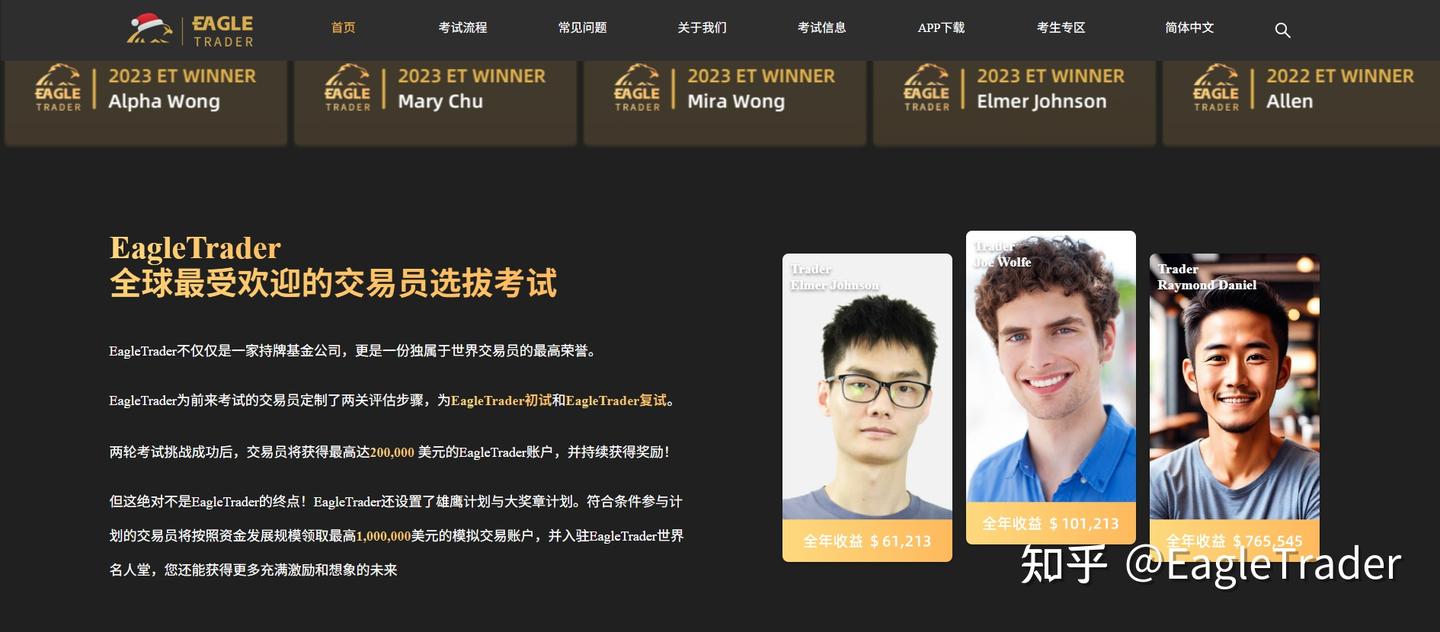
With only a small cost assessment, you can hit an account worth 10,000 to 200,000 US dollars
After passing, you can use a large account to make profits from trading
Profits can be divided, and losses are taken over by the simulation environment
No need to bear personal financial risks
In other words, traders can focus on core capabilities such as strategy, risk control, and execution, rather than worrying about whether their principal is sufficient.
This is of great significance to retail investors. This means that you can finally trade like a professional trader, instead of being restricted by money.
Value 2: Standardized system
The most common saying among retail investors is: “I know how to do it, but I just can’t do it.” In fact, it’s not that it can’t be done, but that there is no system to restrict and strengthen it. ET’s standardized system provides a “framework for trading behavior”:
Clear rules
Clear risk control lines
Unified evaluation standards
Prohibit excessive subjective interference
Mechanized review feedback
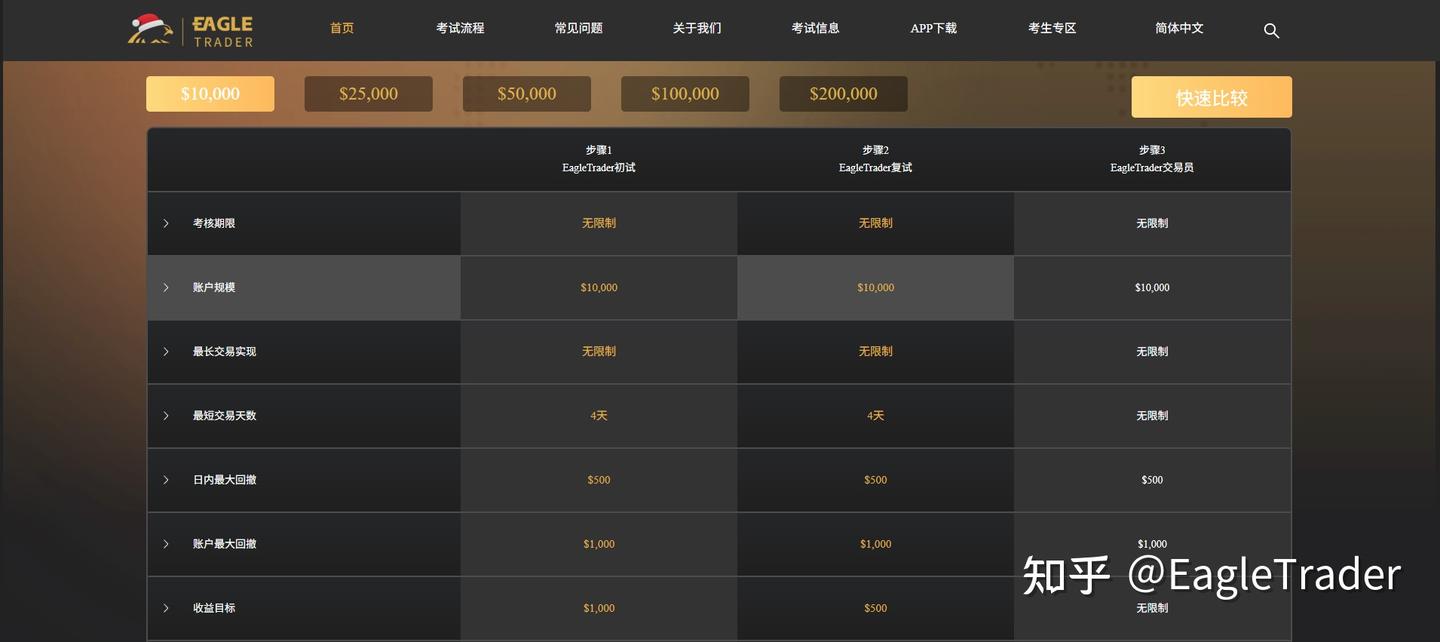
These mechanisms are not “restrictions” in nature, but pull a retail trader from “casual personal trading” to “quantifiable and reproducible professional operations.”
The system itself is risk control. For retail investors, this is called: with a system, discipline can be relied upon; with discipline, strategies can perform stably.
Value 3: Bring trading back to life
The biggest cost of trading with personal funds is not losing money, but the “emotions caused by losing money”. When retail investors lose money, they often have:
Continuous revenge trading
Wanting to get back the money quickly
Enlarging positions driven by emotions
Emotional spillover affects life
In the long run, trading is no longer a profession, but a burden. ET’s mechanism allows traders to no longer have to bear this kind of emotional pressure:
No real financial pressure for losses
There are rules to limit risk rampage
There is an assessment system to help keep calm
There is a clear process to avoid emotional dominance
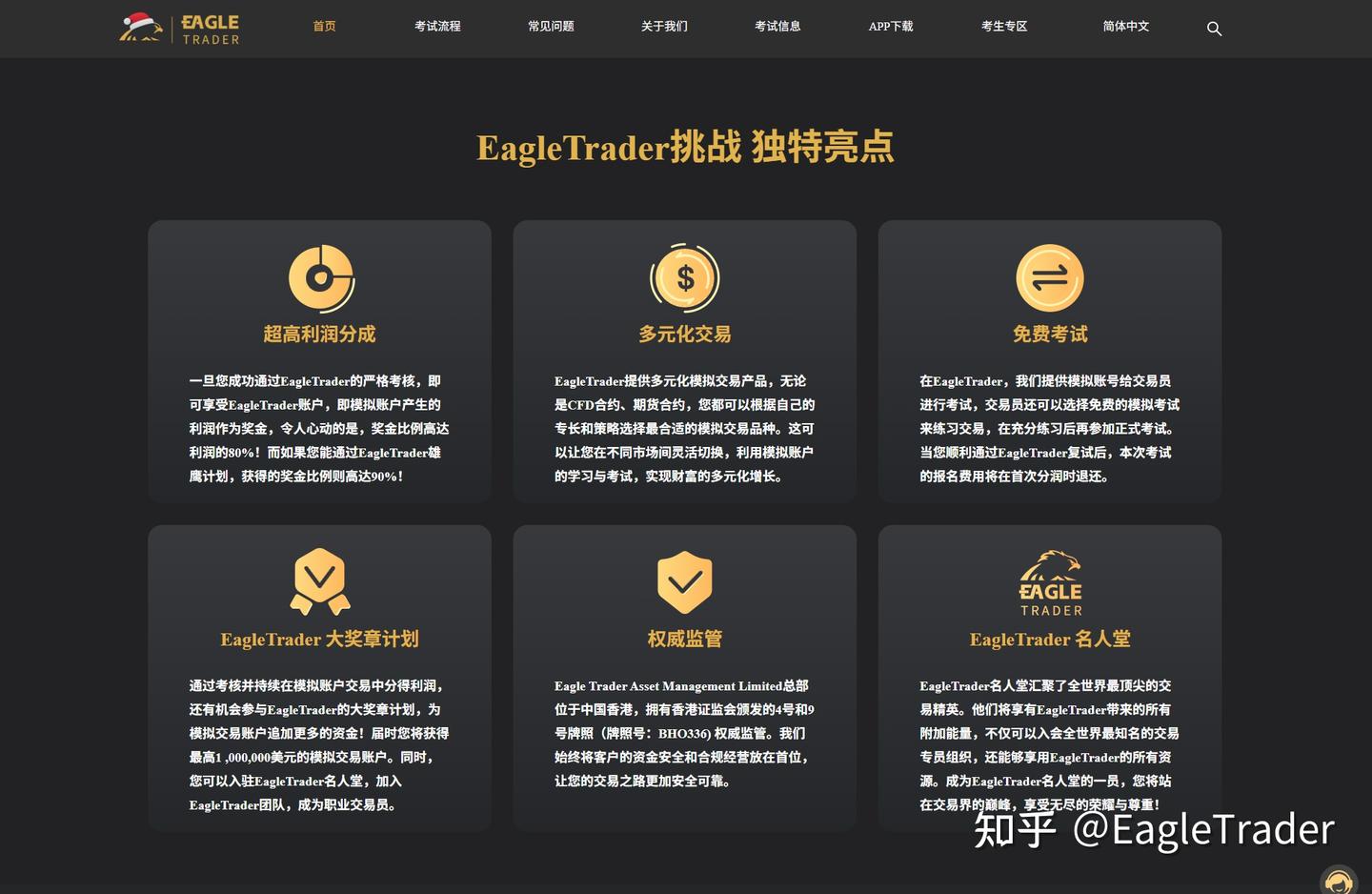
When traders are released from “financial pressure” and “emotional shackles”, trading can return to itself.
The meaning of EagleTrader has never been to “give you an account”. Its real value is to make up for the “financial advantage” that retail investors lack; to make up for the “system discipline” that retail investors lack; and to make up for the most vulnerable “human nature problems” of retail investors.
In such a structure, traders no longer rely solely on luck, emotion and willpower to advance, but use a more professional and controllable system to improve themselves.
This is why more and more retail investors are beginning to realize that trading is not a one-person effort, but a long-term path that requires system support. When you shift from “trading by feeling” to “growing by structure”, you will be surprised at how far your ability can go.
If you have been trapped by funds, discipline, or emotions, perhaps what you really lack is not a new strategy, but a more professional trading structure.