
Does your trading strategy really work? Backtesting verification is the key to building a trading advantage
- 2026年7月15日
- Posted by: Eagletrader
- Category: News
Many traders will gradually form a trading method that suits them based on their own trading experience. It may be a breakthrough strategy, or it may be a set of trend following logic, or even an entry mode designed for certain market conditions.
However, market conditions are always changing, and no single strategy can be suitable for all environments. What you really need to know is under which market conditions the strategy is more likely to take advantage, and under which circumstances it will fail.
If the trading strategy is not verified by data, then trading decisions rely more on experience and feeling. In a trading market full of uncertainty, feeling cannot replace the probability results derived from long-term statistics.

Use data to verify whether the trading strategy has advantages
Trading is essentially a game of probability. Even a mature trading system cannot guarantee that every transaction is correct. Really good traders are not focused on how to achieve zero losses, but on finding ways to have a long-term probability advantage.
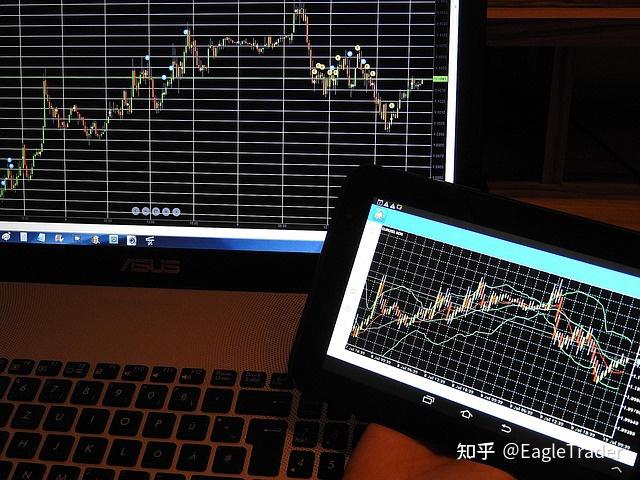
This is also the meaning of backtesting. Through historical market data, traders can conduct a large number of tests on a set of trading rules and collect enough trading samples to analyze the performance of the strategy under different market conditions.
For example:
A trader uses a breakout strategy to trade, but has failed to break through several times recently. He may think that this strategy has failed.
But if you analyze the historical data of the past two years through backtesting and test hundreds of the same trading opportunities, you may find that:
This breakthrough strategy has a higher success rate in a market environment with obvious trends and active transactions, but its performance drops significantly when the market is volatile or market liquidity is insufficient.
At this time, what traders need to optimize may not be the strategy itself, but the conditions for using the strategy. Only by screening data for environments suitable for trading and reducing low-probability opportunities can strategies truly take advantage of them.
Backtesting helps traders establish rules instead of relying on judgment
In addition to verifying whether the strategy is effective, backtesting also has an important role – helping traders establish clearer execution standards.
Many traders askThe problem is that it is easy to be affected by emotions in real trading. Expanding positions after making profits, rushing to adjust strategies after losses, and temporarily modifying trading plans after seeing market changes. These behaviors will gradually make the originally effective trading logic lose its effect.
Backtesting can help traders clarify in advance:
Under what conditions should they enter the market? Under what circumstances should they abandon the transaction? Where should the stop loss be set? How to set the profit target? When these rules are verified by a large amount of historical data, traders can rely more on system execution when facing market fluctuations, rather than temporarily relying on emotions to make decisions.
Where is the best place to verify trading strategies?
Of course, backtesting does not represent all real trading. Historical data verifies the strategy logic, while the real trading environment will also test the trader’s execution ability, risk control ability and fund management ability.
Therefore, for traders who want to further improve their trading capabilities, it is equally important to find a low-cost verification environment before actually investing money.
This is also an important reason why more and more traders pay attention to the proprietary trading model. Compared with directly using personal funds to test new trading strategies, proprietary trading assessments can provide a larger-scale simulated capital environment, allowing traders to verify their trading systems within the constraints of rules.
Traders do not need to bear the cost of real capital losses, but can test whether their strategies are suitable for larger-scale account operations in a trading environment close to the real market, and at the same time test their risk management and execution discipline.
The proprietary trading system created by EagleTrader hopes to help traders complete the process from strategy verification to ability improvement.
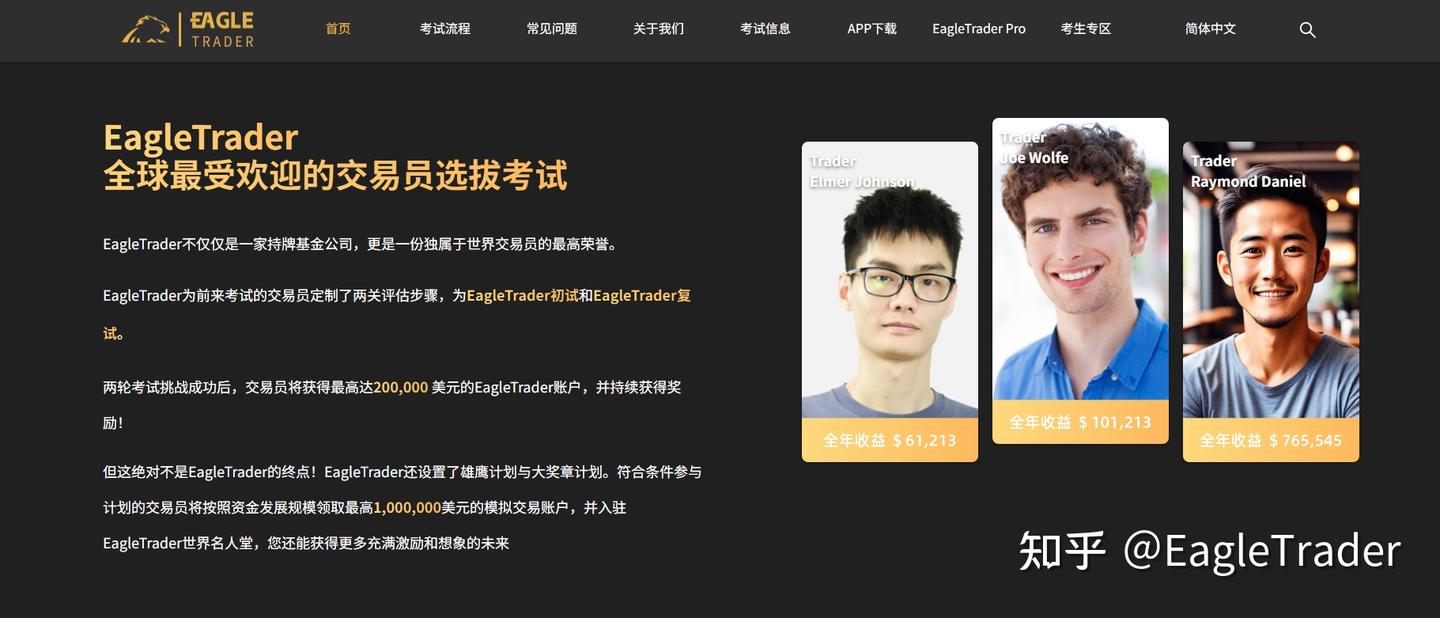
During the assessment process, traders not only need to achieve profit targets, but also need to pay attention to risk control, trading discipline and account management performance.
Through systematic trading data recording and analysis, traders can understand their trading performance more clearly, discover problems that affect trading results, and optimize their trading methods.
Because truly mature trading capabilities do not come from one successful transaction, but are gradually formed through continuous verification, review and adjustment.
Any trading strategy needs to be verified to know whether it is truly suitable for you. Backtesting helps traders discover the strengths and weaknesses of strategies through historical data, while proprietary trading assessments provide a low-cost, low-risk environment for traders to further verify their trading systems.
When trading gradually changes from “trusting one’s own judgment” to “relying onData and rule execution”, trading capabilities will be truly improved.