
EagleTrader trader: Changes in trading logic are the core of the counterattack of the capital curve
- 2026年10月8日
- Posted by: Eagletrader
- Category: News
With the same trading strategy, why does the account curve fluctuate for a long time and suddenly go on a continuous upward trend? Many traders will instinctively think: Either the market is coming, or they have changed to a new method.

Tony Leung’s answer subverted this conventional understanding: “There was no adjustment to the strategy. At that time, it was based on the profit-loss ratio.”
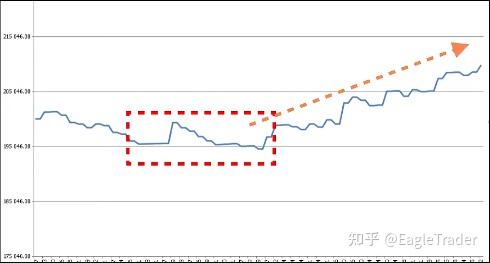
Looking at his net worth curve, the red box indicates a long-term period of repeated seesawing, and only after a breakthrough does it begin to rise smoothly.
What drives the change in the curve is not the trading tool itself, but a change in his understanding of the underlying logic of the transaction.
We have had questionnaire exchanges with Liang Jiawei before. This time, we continued to explore his trading mentality through in-depth online conversations.
Accept that making mistakes is part of the deal
“You can’t be right in every transaction.” This is a very important premise for Tony Leung when looking at transactions now.
Therefore, rather than pursuing correct judgment every time, he is more concerned about whether the loss is still within his plan after a transaction is made wrong; when a truly qualified opportunity appears, whether the potential profit space is worth taking this risk.
In his opinion, the recurrence of the early curve is also the natural result of this process.
There will be stop losses and retracements, but as long as the risk of a single transaction is controlled and a more suitable profit-loss ratio is encountered in the future, it is still possible for the overall rhythm to return.
This seems to be simple logic, but Liang Jiawei was not able to do it from the beginning.
A liquidation forced cognitive restructuring

When he first came into contact with trading, Liang Jiawei also fell into the common misunderstandings of novices: he has a shallow understanding of position management, is easily impulsive in the face of violent market conditions, takes chances, and often deviates from the established trading plan.
During a rapid market fluctuation, his pending order was accidentally triggered, and his account was eventually liquidated.
Looking back at the past, he attributed the core reason for this severe loss to four words: lack of awe.
This loss completely changed his trading thinking.
In the past, his attention was only focused on “how much money can be made from a single transaction.” However, after experiencing the liquidation, the first question he thought about became: how to stay in the market for a long time.
“Only when the principal is still there will you have an opportunity.” This is the trading creed that Liang Jiawei always adheres to.
A single profit can never define trading ability. Once the risk control system is missing, all the profits accumulated over a long period of time are likely to be lost in an out-of-control transaction.
Since then, he has truly accepted that “loss is the normal state of trading” and placed stop loss, position control, and trading plan execution at the core of trading.
Slowing down means growing faster
After joining EagleTrader, Liang Jiawei’s biggest change was that his trading pace completely slowed down.
In his early years, he had strong trading anxiety and always felt that “if you don’t make a trade for a day, you will miss out on profits.”
This mentality caused him to put the cart before the horse and no longer wait for market conditions to adapt to his own system. Instead, he traded for the sake of trading and forcibly looked for entry opportunities, which greatly increased the probability of transaction errors.

Today, he has long abandoned his obsession with high-frequency trading.If there is no market position that meets the standards, just wait and see patiently; if the opportunity to accurately match the system arises, then strictly implement it as planned.
In Liang Jiawei’s view, slowness is also a kind of fast.The “slowness” here is by no means deliberately lying flat and missing opportunities, but rejecting invalid transactions and abandoning emotional operations.
When trading frequency is no longer the goal, his attention can return to the essence of trading: whether the position is of high quality, how to set the stop loss, and whether he can accept controllable losses calmly after misjudgment.
After thinking clearly about these core issues, transactions will become simple and clear, with a measured advance and retreat.
A high-quality position requires appropriate trial and error to increase positions.
After being polished by the market, Liang Jiawei formed a set of mature position management logic, completely getting rid of the influence of adding or reducing positions based on emotions.
He will not blindly add positions just because he is optimistic about a certain market trend. All position adjustments are based on the risk boundary.
In daily trading, he will strictly control the single preset stop loss within 25 US dollars; only when he encounters a highly cost-effective and more certain market position, and the stop loss can be reduced to 10 US dollars or even lower, will he appropriately relax his position and increase his participation.

In short, what determines the size of a position is not trading obsession, but clear and controllable risk boundaries.
At the same time, he also clearly understood that a smaller stop loss does not mean that the transaction will win, and the operation of adding positions will also amplify losses.
Therefore, his logic of adding positions is never based on “predicting that he will make a profit”, but relying on his own trading system and rational decision-making after weighing risks and returns. This is also the core trading quality he accumulated after his liquidation.
From emotional impulsive trading and fear of short positions to calmly accepting losses and patiently waiting for opportunities, Liang Jiawei’s transformation has never relied on new trading strategies.
His path to advancement is simple: strictly control single risk, adhere to the principle of profit-loss ratio, strictly implement the trading plan, and only take action at high-quality opportunities.
There is never an absolutely perfect answer to trading, and it will not be completely finalized just because of a one-time liquidation, nor will it always be smooth just because of a favorable market trend.
Today, Tony Leung always adheres to a core principle: first hold on to the principal, stay in the market, and then wait for exclusive opportunities within the system.
As he repeatedly emphasized: “Only when the principal is still there will there be opportunities.”
Risk warning: The content of this article is based on the trader’s personal experience and trading ideas. It is only used as an experience sharing and does not constitute any investment advice, income commitment or trading guidance.