
EagleTrader: Why is proprietary trading becoming so popular? What opportunities do traders see in it?
- 2026年5月14日
- Posted by: Eagletrader
- Category: News
If you ask ten traders now, there is a high probability that half of them have been exposed to or understand proprietary trading. In a short period of time, this trading model has rapidly gained popularity in the circle – it not only retains the core logic of real trading, but also has clear retracement constraints and profit targets, making transactions more borderline and more enforceable.
It can be seen that more and more traders are starting to try it, so why can proprietary trading be accepted so quickly? What has it changed and what new possibilities has it brought to traders?
A gradually mature trading path
Proprietary trading is not a new concept. In overseas financial markets, this model of “the platform provides funds, traders output capabilities, and profits are shared proportionally” has been developed for many years and has gradually formed a relatively mature industry ecosystem. Public information shows that the scale of the global proprietary trading industry has reached tens of billions of dollars, with a large number of institutions, and has gradually become one of the important career paths for traders.
The reason why this model can exist for a long time is that it essentially solves the core contradiction in the trading industry: people with trading capabilities often lack financial support, and those with funds have difficulty screening out traders with stable profits. Proprietary trading effectively connects capabilities and capital through the mechanism of “assessment + financial support + profit sharing”.
In recent years, with the development of financial technology, this model has begun to gradually become popular in China. Take EagleTrader
As a representative platform, localized adjustments are made based on overseas experience, allowing more domestic traders to have the opportunity to come into contact with this trading model.
Low-risk trading method
For most traders, “trial and error with your own funds” is always an unavoidable source of stress. In the traditional trading model, both novices and experienced traders are inevitably subject to the psychological interference caused by capital fluctuations.
A major feature of proprietary trading is the relative separation of capital risks and strategy verification. Currently, most mainstream platforms adopt a simulated fund assessment mechanism: traders do not need to bear actual trading losses, and only need to pay a certain service fee to obtain a large simulated fund account for strategy verification. The account conditions are synchronized with the real market, and the trading rules are also consistent.
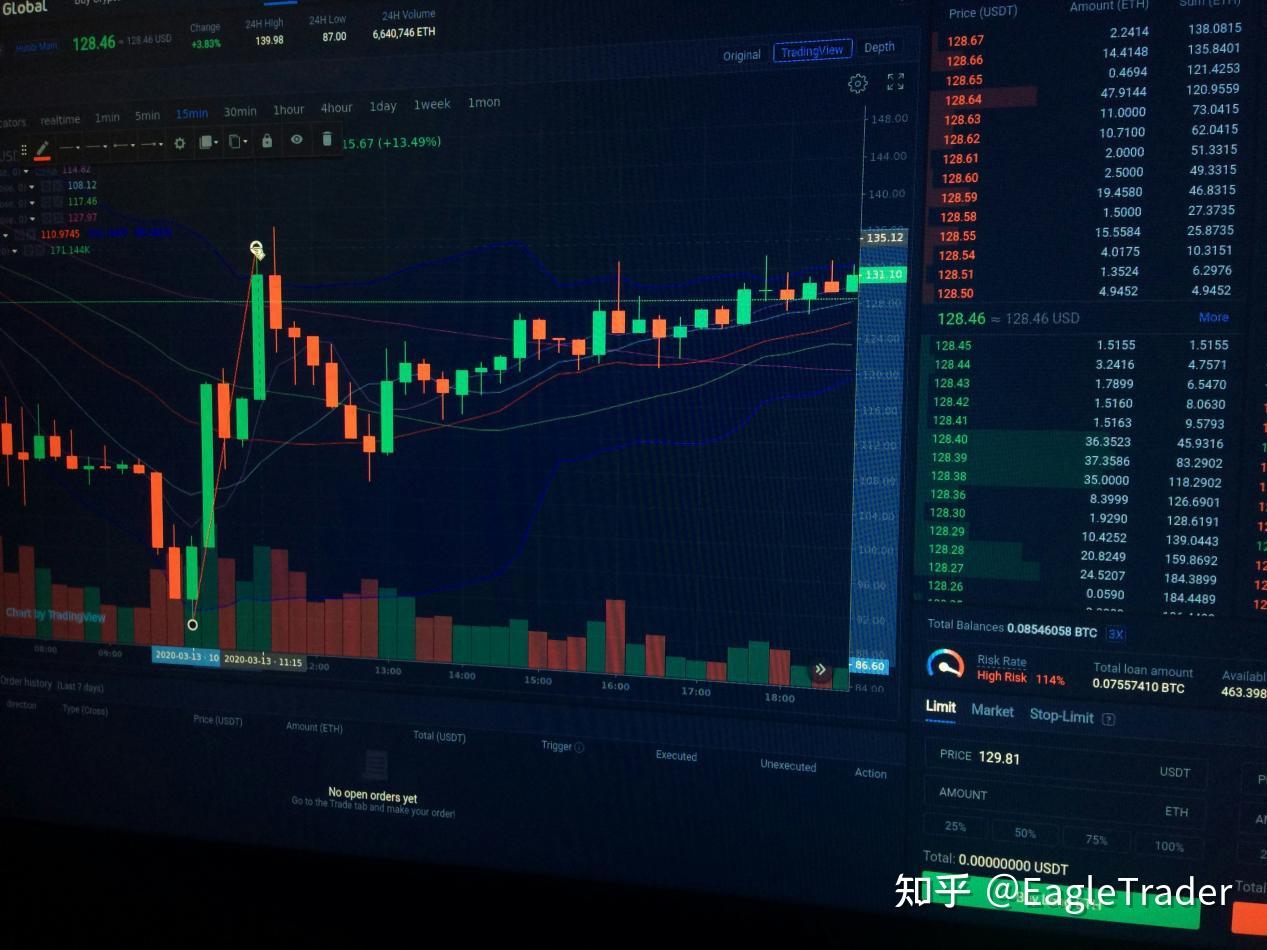
When a trader passes the assessment and enters the profit sharing stage, he or she will receive a proportional share of the profit. This mechanism allows traders to focus on the stability and execution of the trading system itself in a relatively low-pressure environment.
As some participating traders said: “When you are no longer disturbed by capital fluctuations, it is easier to see whether the strategy itself is valid.”
Regulated trading style
Different from the “free trading” imagined by some people, proprietary trading is often based on a strict risk control system. Including daily maximum loss, total drawdown limit, position management and other rules, form a clear set of risk boundaries.
The significance of these rules lies not only in platform risk control, but also in providing “immediate feedback” to traders. In personal trading, some bad habits (such as heavy positions, carrying orders, and not stopping losses) often do not expose problems in the short term, but they will continue to erode funds in the long term. Under a self-operated rule system, these problems will be quickly amplified and forced to be corrected.
Traders with many years of experience have mentioned: “The existence of rules will make you pay more attention to each transaction and implement the plan more strictly. Compared with personal trading, this kind of restriction is an improvement.”
To a certain extent, proprietary trading transforms the original “slow error” process into a “quick error correction” process, thus accelerating the professional growth of traders.
Result-oriented trading system
In the traditional financial system, the growth path of traders is often affected by factors such as position structure and interpersonal relationships. Proprietary trading provides a more direct path – with trading results as the core orientation.
Usually, self-operated trading platforms will set up a staged assessment mechanism: starting from the simulation assessment, the stability of the strategy will be gradually verified; after passing the assessment, it will enter the profit sharing stage and receive profit sharing support; as the trading performance continues to be stable, the capital scale and sharing ratio will also increase accordingly.
On this basis, some platforms will also provide further development opportunities for traders with excellent performance and long-term stable profits – such as providing professional trading positions, or participating in the management of larger funds. This means that traders can not only earn profits through trading, but also have the opportunity to obtain a more stable and long-term career development path within the platform system.
The entire process emphasizes trading ability itself rather than qualifications or background. For traders with stable strategies, this mechanism not only provides room for growth, but also allows a more direct correspondence between income and ability.
The popularity of proprietary trading is essentially a profound change in the structure of the trading industry – it breaks down financial barriers and allows more traders to participate in market competition based on their capabilities.
It needs to be emphasized that it only lowers the financial threshold, not the ability threshold. This is a long-term practice about discipline, risk control and execution, and it is also a process of mutual achievement between the platform and traders. Is there anything else you want to know about proprietary trading? Welcome to leave a message for discussion.