
ET Trading Insights | The root of the habit of heavy positions that cannot be changed is in your belief system
- 2026年8月21日
- Posted by: Eagletrader
- Category: News
When most traders first came into contact with trading, they should have heard: Don’t take heavy positions and don’t carry orders. These bad trading habits are familiar to all of us, but once I actually start trading, I can’t control my hands and my mind swings back and forth with the market.
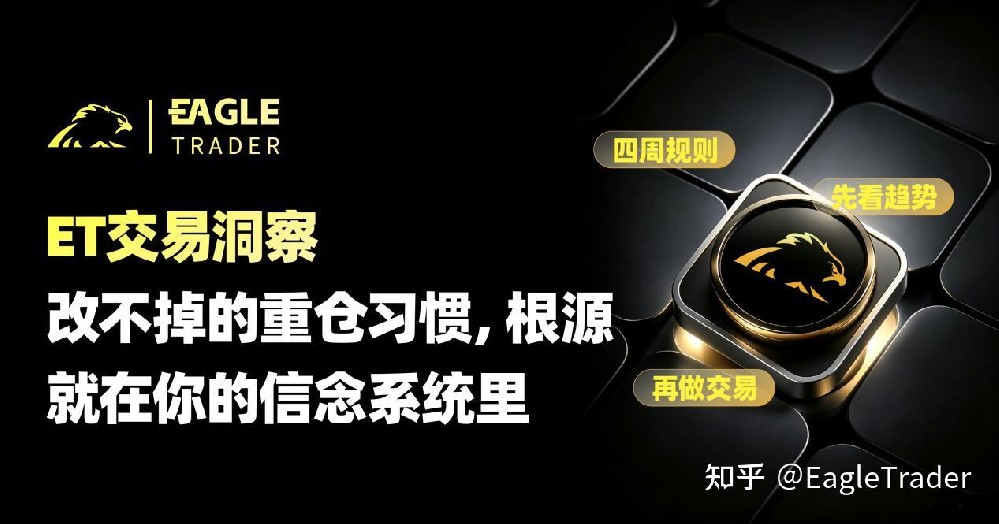
In fact, Mark Douglas has already revealed the truth in “Trading Psychological Analysis”: the root cause of most continuous losses is never the technical level, but the traders’ beliefs and attitudes.
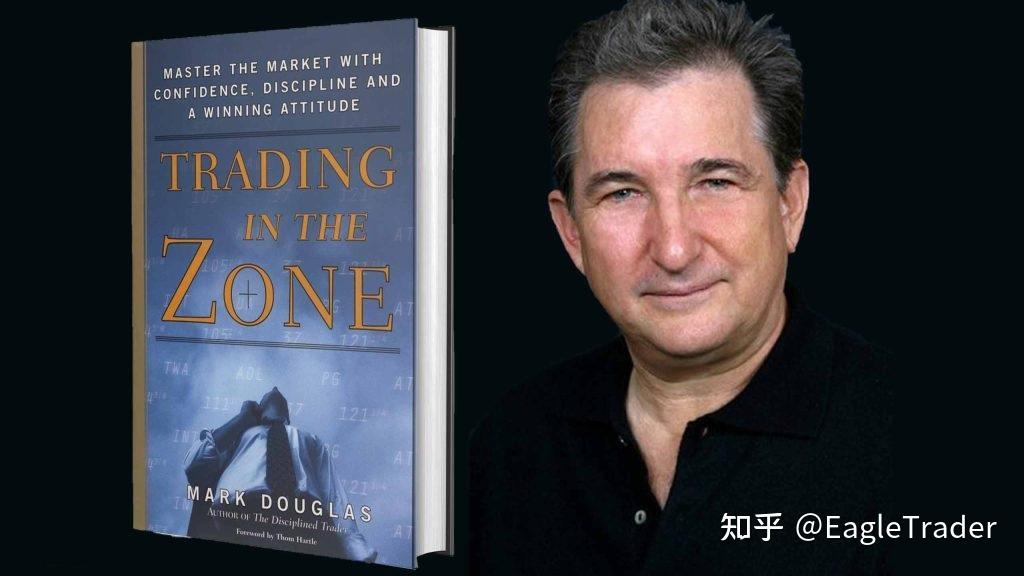
95% of trading errors are essentially psychological problems. No matter how many analytical methods you learn, as long as your inner beliefs do not change, your operations will always be guided by instinct.
The root cause of heavy positions is hidden in your belief system
There is no shortage of traders around us: knowing full well that the risk of heavy positions is high, but always unable to resist full positions; clearly setting a stop loss, but insisting on waiting for a rebound; the trend has gone bad, but still holding on to a fluke mentality to cover positions and dilute costs.
These behaviors appear to be “out of control”, but they are actually driven by a set of deep-rooted beliefs. Douglas pointed out that beliefs are mental structures with their own energy that will influence our interpretation of the market through the association mechanism. For example, most people have formed the understanding that “making mistakes = punishment = failure” has been formed since childhood. After entering the transaction, the brain will automatically shift this account: a normal stop loss is not only a capital retracement, but will also be interpreted as “I was wrong” and “I am not capable”, and will be accompanied by a strong sense of frustration and humiliation.
It is this kind of psychological association that gives rise to the two most common extremes in trading: holding on to losses and being unable to hold on to profits. The former refuses to admit their mistakes and would rather take huge risks than accept “failure”; the latter is afraid of profit taking and hurriedly pockets the money after making a little, fearing that the money will fly away again.
These two seemingly opposite problems are actually two sides of the same coin: you do not accept the uncertainty of the market from the bottom of your heart, and always want to use subjective expectations to fight the market trend.
And heavy positions are the most extreme outlet for this mentality. Many people are obsessed with heavy positions. Essentially, they want to rely on a single “correctness” to quickly prove their abilities and cover up their inner anxiety and lack of confidence. They firmly bind the profit and loss of a single transaction to their self-worth. When they make a profit, they feel that they are trading geniuses, and when they lose, they fall into self-denial. As a result, the trading actions became more and more deformed, and eventually fell into a vicious cycle of “heavy positions – losses – increased positions – liquidated positions”.
Can’t change your beliefs? Use rules to support yourself first
Douglas said in the book that beliefs cannot be deleted directly, and you cannot completely change your habits by “telling yourself not to take heavy positions” or “reminding yourself to stop losses.” Old beliefs will not disappear out of thin air. New beliefs can only be continuously injected with energy through continuous positive experiences, slowly allowing them to replace the dominance of old beliefs. This process is the reconstruction of trading mentality.
But it is too difficult to carry out the changes on your own. Human nature will always prevail when the market fluctuates. We all know the truth, but we just can’t do it. This is why EagleTrader always advocates light trading: when you are still unable to fully control your trading mentality, you do not have to force yourself to “rely on willpower and self-discipline”. You can use clear external rules to help you cross this hurdle. The proprietary trading assessment is such a safe training ground.
Many people think that assessment is just a threshold. In fact, its core value is to use a set of clear and rigid trading rules to help you turn “light positions and risk control” from empty principles into operational habits that are implemented every day.
The position limit, retracement limit, and risk control requirements in the assessment are never meant to make things difficult for traders, but to put a “guardrail” on the out-of-control mentality: when you subconsciously want to take a heavy position and bet on the market, the self-operated assessment system will stop you; when you want to carry the order without losing, the maximum account drawdown limit rule will remind you.
You don’t need to have a perfect mentality from the beginning, you just need to follow the rules, gradually become familiar with the trading rhythm under controllable risks in light position transactions, and use external constraints to drive a change in your inner mentality.
What you practice with light positions is not your skills, but your trading mentality
In the self-operated assessment, you need to pay attention to the maximum intraday drawdown within 5%, and the maximum account drawdown cannot exceed 10%. Under such strict rules, you will learn to trade with light positions.
<img alt="" src="https://www.hudianbaoseo.cn/uploads/allimg/20260821/1787281902199946.jpg" width="654" height = 347 It has nothing to do with your ability or value.
This is what Douglas calls “probabilistic thinking.” When you no longer insist on being correct in every transaction, but focus on long-term rule execution, new beliefs will slowly take root.
Every time you open a position according to the rules, every time you strictly implement a stop loss, and every time you hold a position steadily in profit, you will recharge the new beliefs of a “professional trader”. Over time, you don’t need to deliberately remind yourself.
“Don’t be too heavy on the position.” Be light on the position, control risks, and abide by the rules. This will become your natural trading instinct.
After completing the assessment, many traders will find that their biggest gain is not to obtain trading funds, but to finally get rid of the “bet on life” mentality and learn to treat every transaction with a professional and restrained attitude.
Trading is never a risk-taking adventure, but a long-distance race for long-term viability. The excitement brought by heavy positions is fleeting, and steady and steady trading of light positions is the right path to take in the long run.
When you can face profits and losses calmly and implement rules stably in a light position, you will truly have crossed the threshold of entry into trading.