
One once had a liquidated position every week, and the other once took carrying orders as a daily routine: How did they rebuild the system and get profit sharing?
- 2026年11月9日
- Posted by: Eagletrader
- Category: News
One used to liquidate his position once a week, and the other was accustomed to holding on to his losses and was unwilling to stop losses.
Both of them have suffered repeated setbacks in trading. Now they not only have a firm foothold in the market, but also successfully passed the assessment and received EagleTrader profits.

Interestingly, despite similar difficulties in the past, the trading systems crafted by the two went in completely different directions: Jiang Hengwei relied on Bollinger Bands and Naked K combined with market sense to capture familiar price patterns; Chen Shubin put risk control first and strictly adhered to the iron laws of strategy, positioning and execution.
How did two trading systems with completely different styles take shape in the market?
In this exclusive interview, we talk to two EagleTrader profit sharing traders to break down the trading logic behind Jiang Hengwei’s profit sharing of US$1,052 and Chen Shubin’s profit sharing of US$4,852.
Find familiar trading patterns from Bollinger Bands and Naked K

Jiang Hengwei, who entered the market in 2021, initially experienced frequent liquidations.
After constant trial and error, he focused on gold and became familiar with price trends through repeated observations.As he said: “If you know 10 things, it’s not as good as being perfect.”
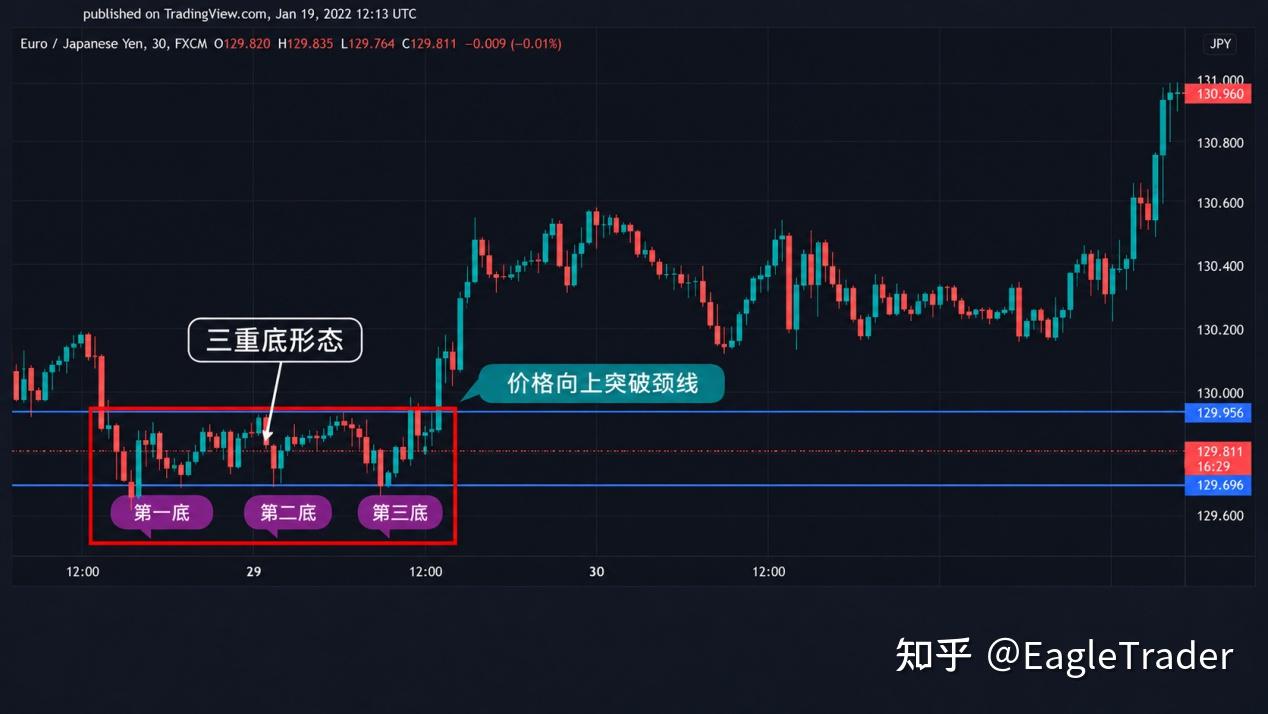
In terms of specific methods, Jiang Hengwei combined Bollinger Bands with naked K.
He observes the performance when the price moves to the edge of the track, and then combines the K-line and lower shadow lines or full yin and full yang to look for reverse trading opportunities.
This method does not come from fixed technical courses, but from the experience accumulated through long-term observation – what he understands as “disk sense”.
But having a sense of the market does not mean entering the market at will.
In his logic, whether you can accept stop loss is the prerequisite for opening a position; as long as the stop loss space you bear is too large, you will give up decisively even if the direction is correct.
In addition, he pays special attention to the historical success rate of patterns and tends to retain patterns with a winning rate of more than 80% (note: this winning rate is based on personal experience and has not been independently verified).
Nowadays, he is no longer eager to participate in the market that he cannot understand: “If I feel that I can’t understand it, I will turn it off and wait.”
From pursuing quick profits to waiting for familiar patterns, his trading gradually formed its own rhythm.
A complete trading system cannot be separated from three parts

Unlike Jiang Hengwei who focused on specific forms, Chen Shubin gave a clear systematic framework.
He believes that a complete trading system contains three parts:
Risk control and position management (ranked first) strategy logic (market buying and selling points) execution and waiting. This understanding came from his painful price.
Chen Shubin recalled that his account was liquidated due to short selling against the trend and increasing positions due to floating losses.
He has experienced heavy positions, carrying orders, and unwillingness to stop losses.
This made him realize: Even if the strategy can accurately identify buying and selling points, once the position is out of control and the exit rules cannot be executed, devastating losses will still be caused.
Therefore, his single risk will be flexibly adjusted based on the winning rate and profit-loss ratio.
After entering the profit sharing stage, he prefers conservative position management and strictly controls the risk ratio of some transactions to around 1% or 0.5%.
In his view, the trading system is not just about finding entry points, but more importantly, it is about allowing risk control, strategy and execution to cooperate with each other.
How can I verify my judgment if my trading methods are different?
Jiang Hengwei: Try new forms repeatedly before considering practical applications.
When discovering a new form, Jiang Hengwei will not directly apply it to actual transactions. Instead, he will first test it repeatedly through a simulated account. After the performance is feasible, he will use small funds to verify it.
When he makes consecutive mistakes, he will review the pattern to determine whether there is any deviation, and whether he strictly abides by the stop loss.
Chen Shubin: You cannot negate the entire system based on just a few losses.
Chen Shubin pays more attention to long-term verification: “It is impossible to judge the quality of the system with just a few transactions. You cannot negate the previous long-term verification through one day’s fluctuations.”
When he suffered consecutive losses, he first checked whether he strictly implemented the rules.
As long as the execution does not deviate, he will not blindly overturn the strategy.
However, he also admitted that if a system cannot obtain positive feedback for a long time, it needs to re-examine its strategic logic and positions.
From repeated liquidation to paying attention to discipline
Although their methods are different, their experiences are highly similar – both have paid a heavy price for position and emotion management.
The first two times Jiang Hengwei participated in the EagleTrader Max model, he was eliminated because the intraday retracement exceeded 3%.
This forced him to incorporate position arrangements, stop loss settings and trading frequency into his daily routine: “I think trading is a discipline, and the best way to discipline is habit.”
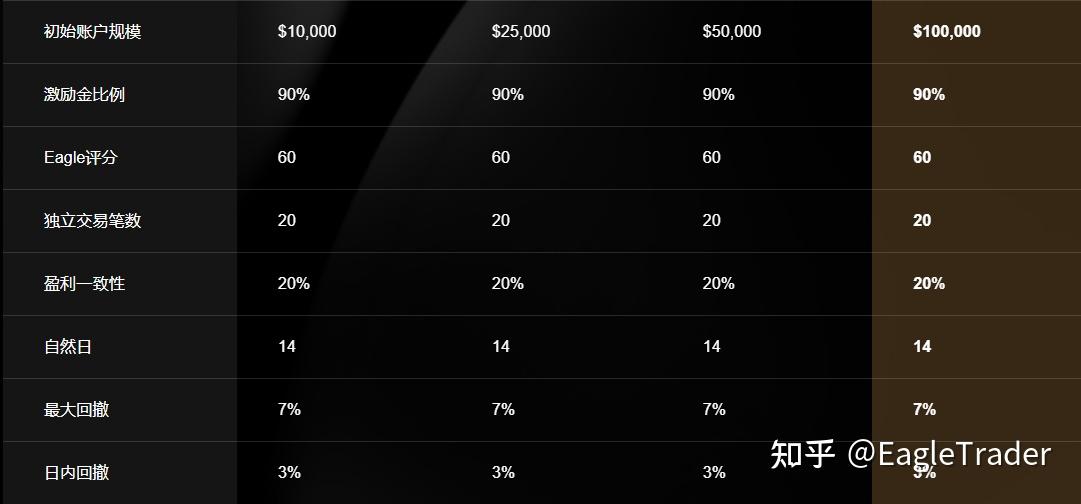
Chen Shubin has also transformed from a radical who was eager to recover his capital and added positions at a loss to a mature trader who respects external risk control rules.
Especially during the profit sharing stage, he began to carefully calculate the risks of each transaction.
Even though profits have been shared, neither trader considers himself a fully mature trader. Jiang Hengwei still said that he needs to improve his mentality of taking profits early due to lack of confidence, and Chen Shubin also admitted that he needs to continue to improve the system.
Their trading change is not that they will no longer lose money, but that they realize that instead of recovering a certain loss, controlling risks and complying with the rules are the only solutions to keep trading going.
There is no single answer for trading systems.
Jiang Hengwei’s solution is to rely on experience and patterns to capture familiar opportunities; Chen Shubin’s solution is to put risk control first and establish a strict execution framework.
Although the paths of the two are different, they are essentially the same: traders must know their entry basis, risk boundaries and exit conditions, and continuously test them in the real market.