
Proprietary trading has entered the era of compliance. How do traders choose a long-term development platform?
- 2026年7月29日
- Posted by: Eagletrader
- Category: News
In recent years, proprietary trading (Prop
Trading) model is developing rapidly in the global trading market. Through trading ability assessment, risk rule management and account size support, the proprietary trading platform provides traders with a development method that is different from traditional personal trading.
As the number of industry participants continues to increase, the market’s focus on proprietary trading platforms is also changing.
<img alt="" src="https://www.hudianbaoseo.cn/uploads/allimg/20260729/1785292405903150.jpg" width="654" height = 343
This has also pushed the global proprietary trading industry to enter a stage that pays more attention to compliance and long-term development.
Overseas leading platforms are exploring compliance development
In the past few years, the proprietary trading industry has mainly developed in the European and American markets. Due to differences in the regulatory definitions of proprietary trading models in different countries and regions, many early platforms mainly focused on simulated trading environments, trading capability assessments, and income distribution mechanisms.
However, as the scale of the industry expands, some leading platforms have begun to actively explore more standardized development directions.
For example: In recent years, some representative overseas proprietary trading platforms have begun to take action. Topstep, a futures self-operated trading platform, has further improved its business system in the U.S. market by registering relevant financial business qualifications;
Tradeify has strengthened its business compliance foundation by arranging regulated introduction brokerage business and cooperating with trading infrastructure service providers;
In addition, MyFundedFutures has also publicly expressed its plan to advance the application for relevant regulatory qualifications, hoping to further improve the standardization of platform operations.
At the same time, FTMO has also further improved its layout in the financial market by acquiring traditional financial institutions.
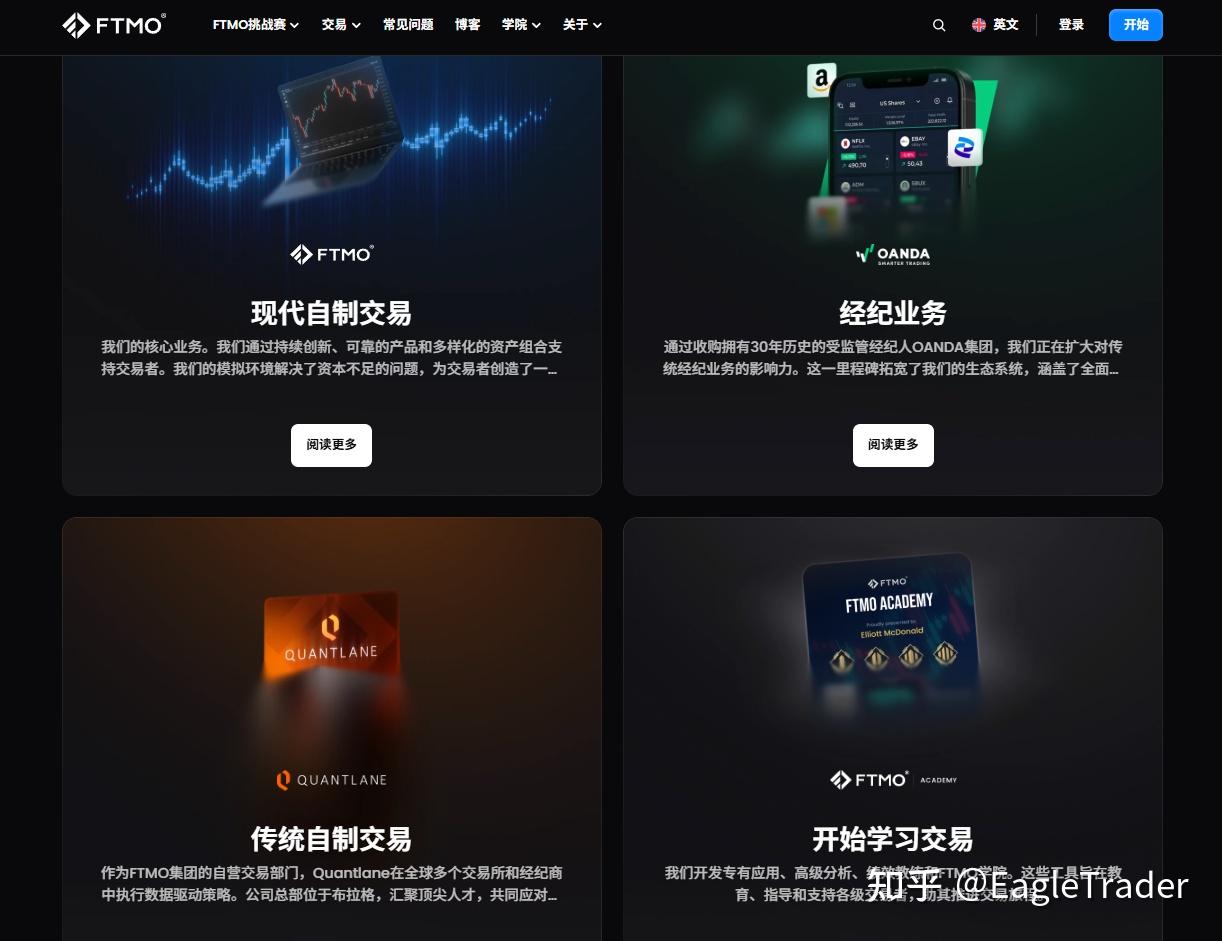
These industry changes reflect the future competition of proprietary trading platforms, not only in account size and product design, but also in compliance systems, risk management capabilities and long-term operational capabilities.competition.
EagleTrader: Building a compliance system from the moment it enters the market
In the context of the global proprietary trading industry gradually becoming standardized, EagleTrader has regarded the construction of a compliance system as an important foundation for the development of the platform since it entered the Chinese mainland market.
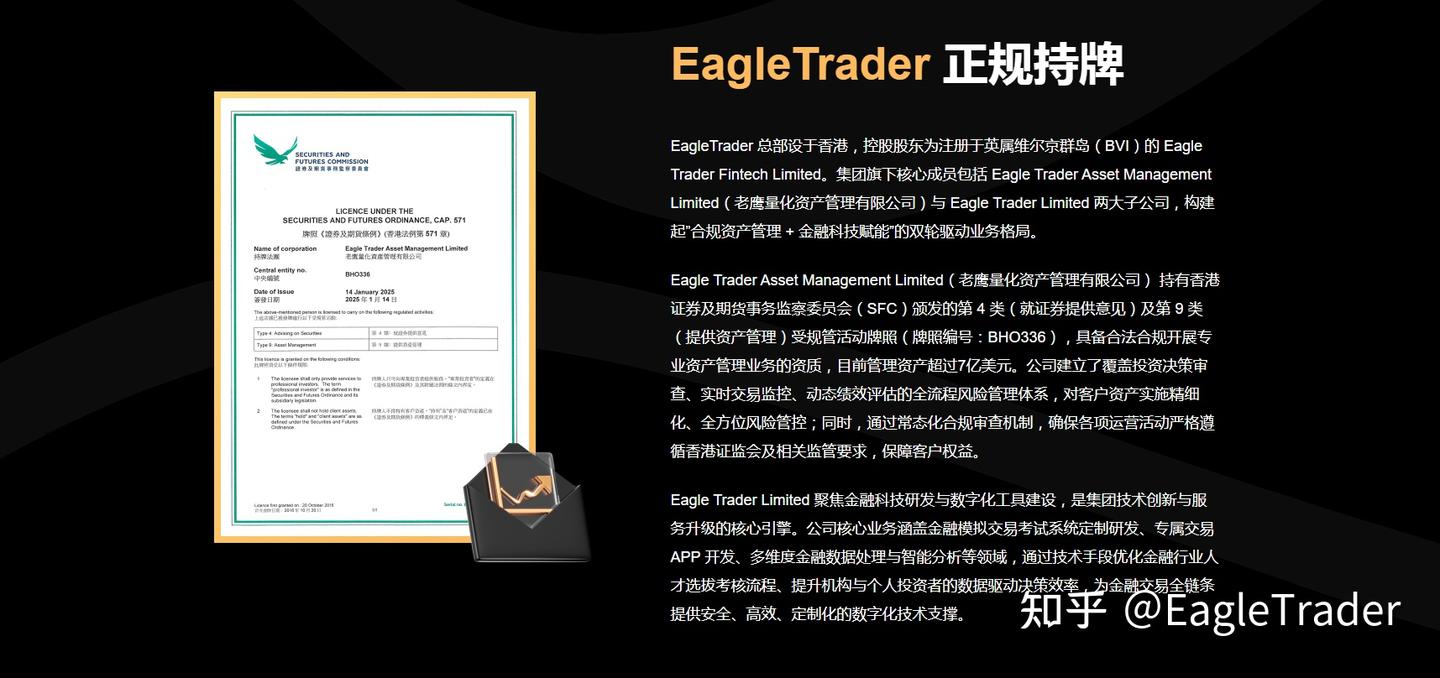
EagleTrader is headquartered in Hong Kong, and its controlling shareholder is Eagle Trader Fintech Limited registered in the British Virgin Islands (BVI).
The core entities of the group include:
Eagle Trader Asset Management Limited (Eagle Quantitative Asset Management Co., Ltd.)Eagle Trader
Limited is responsible for the construction of asset management systems and the research and development of financial technology capabilities respectively.
Among them, Eagle Trader Asset Management
Limited (Eagle Quantitative Asset Management Co., Ltd.) holds Type 4 (providing advice on securities) and Type 9 (providing asset management) regulated activity licenses (license number: BHO336) issued by the Hong Kong Securities and Futures Commission (SFC), and has the qualifications to conduct relevant regulated financial businesses.
Relying on licensed entities, the company has established a risk management system covering investment decision review, transaction monitoring and performance evaluation, and improved the standardization of business operations through a continuous compliance review mechanism.
At the same time, Eagle Trader Limited focuses on financial technology research and development, providing digital support for the platform through technical construction such as trading systems, data processing, and intelligent analysis tools.
Through the dual system of “compliant asset management + financial technology empowerment”, EagleTrader hopes to provide traders with a more stable, transparent and efficient trading service experience.
Local regulatory background is closer to the needs of domestic traders
For domestic traders, when choosing a proprietary trading platform, in addition to paying attention to the trading opportunity itself, they also need to pay attention to the operating system behind the platform.
Compared with some overseas platforms that have to face differences in language, rule understanding and service communication, EagleTrader relies on Hong Kong’s financial market environment and localized service system to provide domestic traders with a platform experience that is easier to understand and use.
As an international financial center, Hong Kong’s mature financial regulatory system also provides a standardized development foundation for enterprises to carry out related businesses.
From establishing a compliance system when entering the Chinese mainland market to continuing to improve its technical service capabilities, EagleTrader hopes to promote the development of proprietary trading in a more transparent and standardized manner.
As the global proprietary trading industry gradually moves towards the stage of standardization, compliance capabilities are becoming an important foundation for the long-term development of the platform.
For traders, choosing a platform that not only focuses on trading opportunities, but also pays attention to the operating system and long-term development will become an important consideration for participating in proprietary trading in the future. More knowledge about proprietary trading is still being shared. If you are interested, please follow us!