
SAR parabolic steering: from entry to profit taking, helping you follow the trend and avoid major retracement
- 2026年6月25日
- Posted by: Eagletrader
- Category: News
In the technical analysis system, some indicators with simple structure and clear logic are often used by traders in their own trading systems, such as SAR Parabolic Steering (SAR).
SAR). It expresses the current trend state of the market through a series of point changes above or below the price, and at the same time helps traders to observe the market rhythm to a certain extent.
Sometimes during the actual trading process, the chart structure can be seen clearly, but when actually placing orders and holding positions, it is easily affected by price fluctuations, resulting in inconsistent entry and exit rhythms. What SAR provides is a relatively fixed reference method, making it easier for trading behaviors to remain unified in different market environments.

1. What is SAR parabolic steering?
SAR(Parabolic SAR) is a trend following indicator proposed by J. Welles Wilder Jr., whose full name is Stop And
Reverse (stop and reverse).
It expresses the market status through a series of “point marks” that appear on the K-line chart:
When the point appears below the price: it indicates that the market is in an upward trend
When the point appears above the price: it indicates that the market is in a downward trend
When the point switches up and down: it indicates that the trend may be reversed
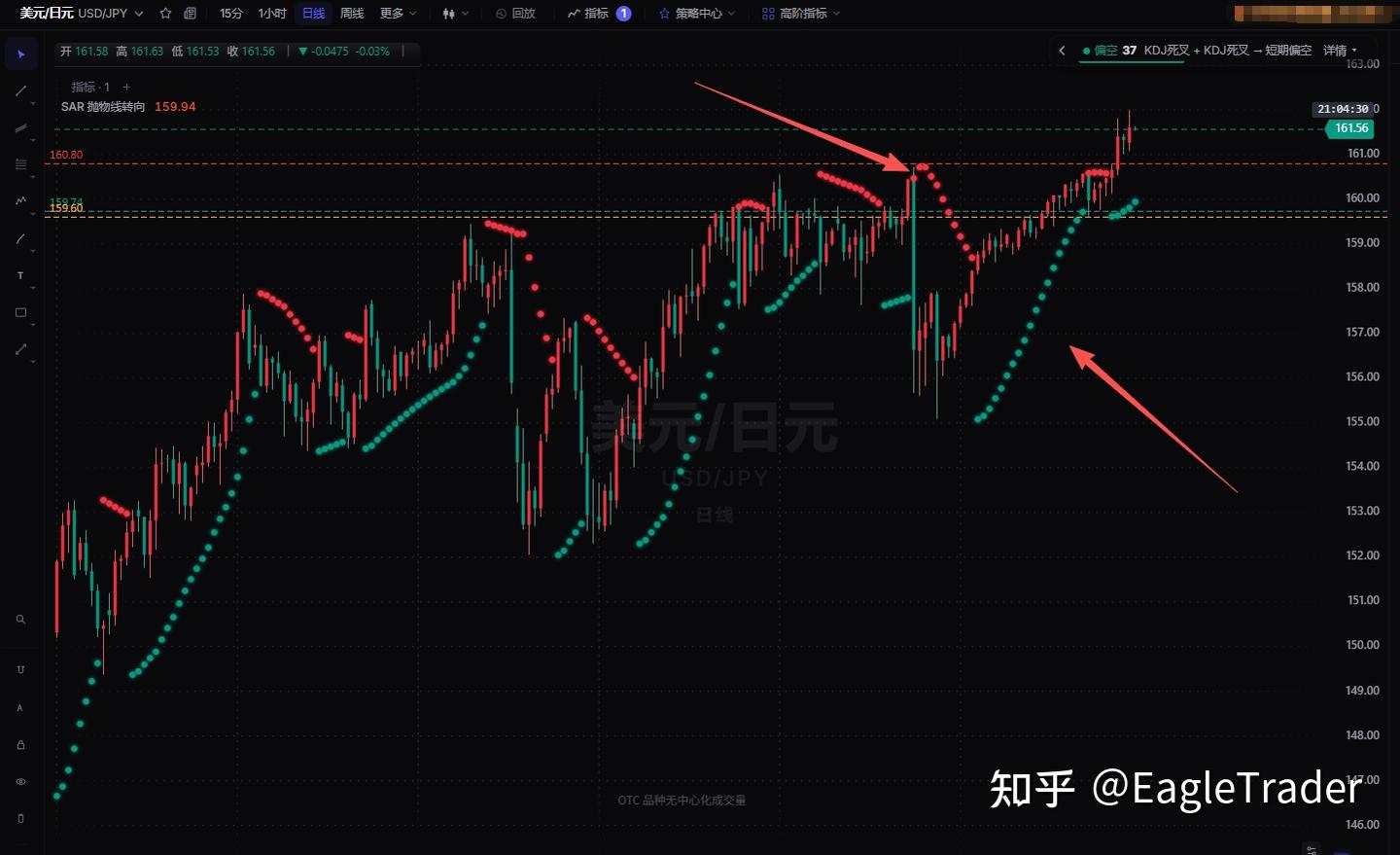
Visually, it is very simple, just a series of points moving up and down around the price, but it expresses a core logic: whether the market is still operating in the same trend.
Therefore, SAR is not essentially a forecasting tool, but a “trend status marking system”.
2. How to use SAR?
The use of SAR can be divided into three core scenarios: trend judgment, trading signal reference, and position management.
The first is trend judgment. When the point continues to appear below the price, the market structure is more biased towards the long side; when it continues to appear above the price, the market structure is more biased towards the short side. This method is suitable for quickly identifying the current market direction.
The second is the trading signal reference. When the SAR switches from above to below the price, someThe trading system will use it as a long start reference; reverse switching as a short reference. However, in actual use, this part is usually confirmed in conjunction with other indicators or structures, rather than used alone.
The third is position management. SAR will continue to move as the price advances. For example, when holding a long position, the point will gradually move upward. Traders can use this change as a reference for dynamic stop loss, allowing the stop loss position to automatically adjust as the market develops.
3. The application value of SAR in self-operated trading assessment
In trading, SAR provides more of a regularized execution method, which can help traders maintain consistency in trend markets while reducing the impact of fluctuations caused by subjective judgments.
In the proprietary trading system, this characteristic will be more obvious. Especially in trader assessment systems like EagleTrader, the evaluation focus is not only on profitability, but also on risk control and trading stability.
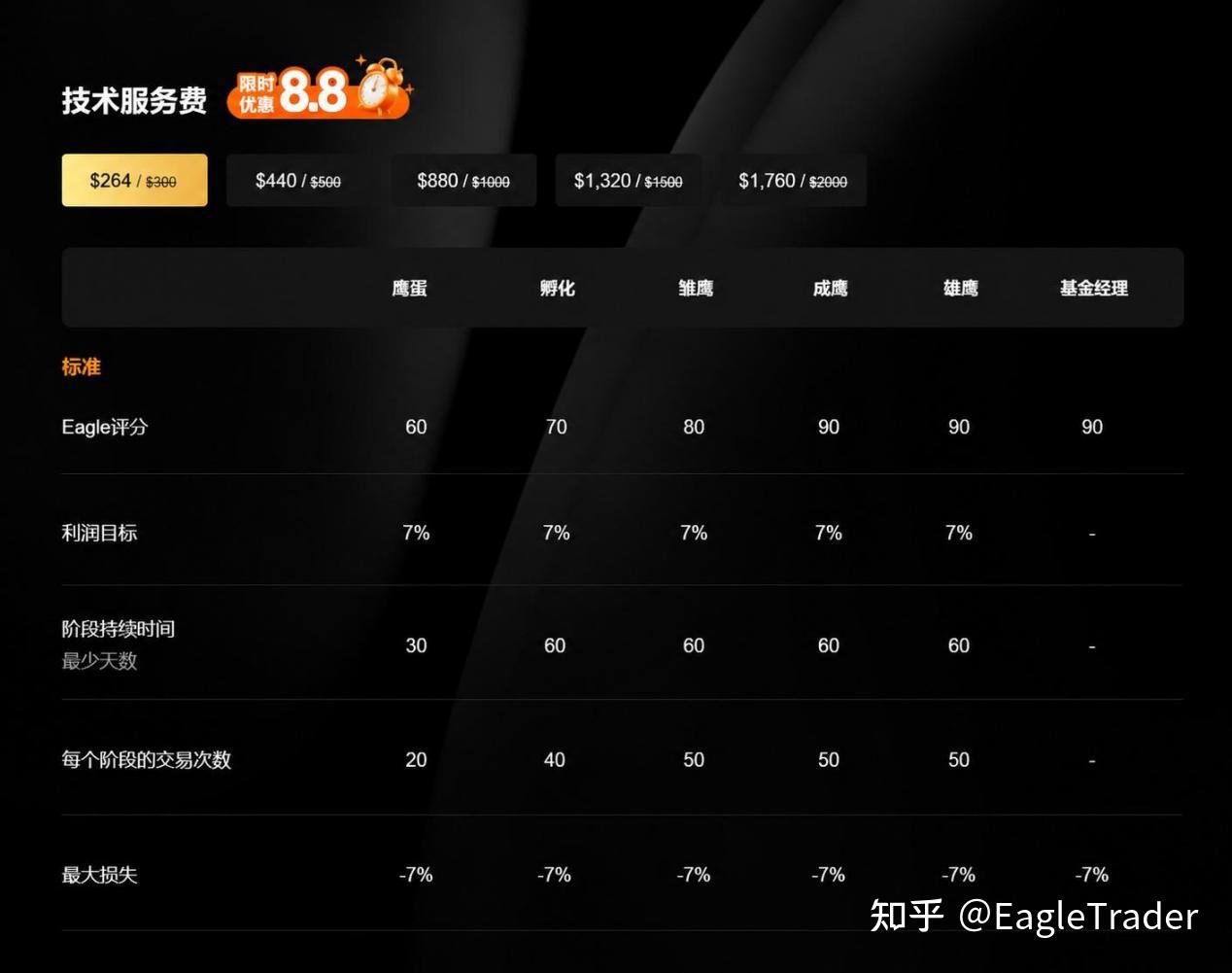
Many traders will encounter a typical problem in the early stage of the assessment: focusing too much on the profit target and ignoring risk management, resulting in an expansion of the retracement or an out-of-control trading rhythm. The role of SAR in this environment is more towards “structured trading tools”.
It can help traders achieve three points in the assessment:
First, control the retracement. Through the SAR dynamic stop-loss mechanism, traders can exit the market more promptly when the trend reverses to avoid profit taking or loss expansion.
Second, improve execution consistency. SAR provides clear rules rather than subjective judgments, which helps reduce emotional trading.
Third, strengthen the ability to hold trend positions. The biggest problem for many traders is “not being able to hold an order”, and the moving characteristics of SAR can help traders extend the holding period as much as possible during the trend.
But SAR is not suitable for all market environments. In a market with an obvious trend, it can follow the price rhythm very well; but in a volatile market, when the price fluctuates repeatedly back and forth, the SAR may switch positions frequently, thus generating more invalid signals.
Therefore, in actual use, SAR is usually combined with trend structure, moving average system or price action analysis, rather than being the only basis alone.
The role of SAR is not to predict the market, nor to improve the winning rate, but to provide a relatively fixed reference method to make the trading process more regular.
In actual trading, many problems do not come from judgment, but from inconsistent execution. SAR uses trend markers and trailing stop loss mechanisms to make it easier for traders to maintain protection in different market environments.Adhere to the same logic.
This ability will be even more important in the self-operated trading assessment. Therefore, EagleTrader also hopes that traders can improve their various abilities through continuous learning.