
The financial advantage of proprietary trading is actually the most useless?
- 2026年11月11日
- Posted by: Eagletrader
- Category: News
Many traders are exposed to the proprietary trading model for the first time, and it is easy to understand it as “trading with a large account on the platform”: the capital scale is larger and the pressure on own funds is smaller. It seems that as long as they pass the assessment, they can solve the capital problem in the transaction.
But what the self-operated model really provides is not “free big money”, but three things: regularized risk budgets, external risk control constraints, and a reviewable assessment environment.
Its value is not to make money for you, but to use rules to help you discover and improve your own trading problems.
Regularized risk budget: putting risk management first
When trading with their own funds, many traders are often vague about their risk budget.
How much the order can lose, how much the day’s loss must be stopped, and how much the maximum retracement must be to reduce the position. Many people decide based on their feelings in the market.
As long as the market fluctuates, rules will easily give way to emotions.
The difference between the self-operated model is that drawdown limits, intraday risk control, and position rules are written in advance.
Traders must consider before entering the market: How much risk budget does this transaction occupy, what are the conditions for reducing positions, and what are the exit rules.
Drawback limits, intraday risk control, and position rules force traders to prioritize risk management.
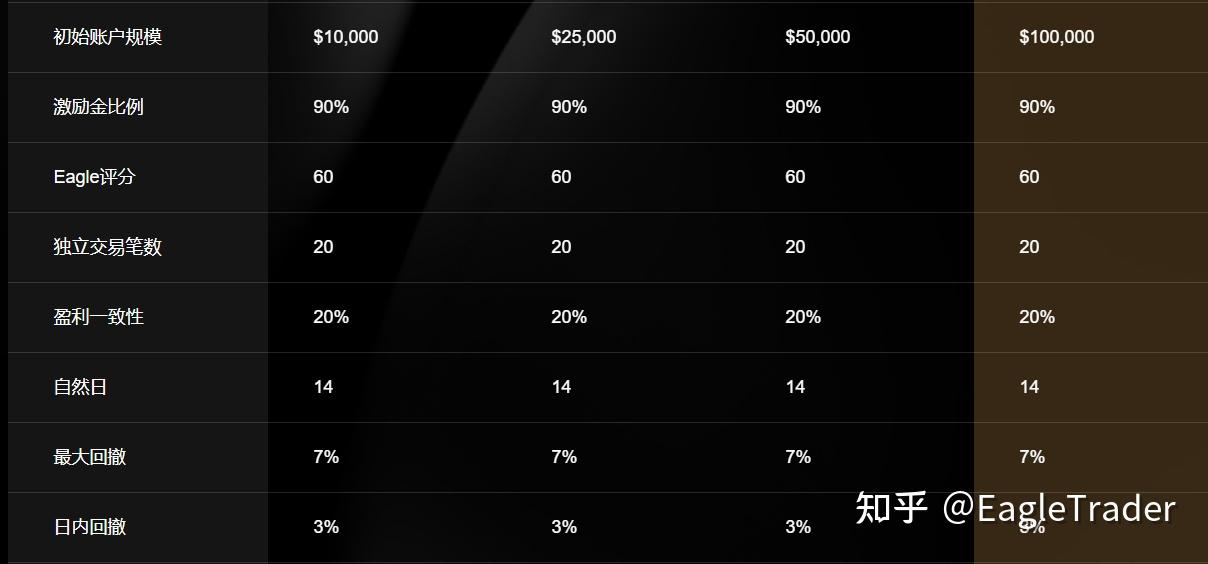
Traders can no longer wait for floating losses to expand before thinking about “whether to leave”, but should define “under what circumstances to reduce positions and under what circumstances to leave” in the trading planning stage.
The clearer the rules, the less need to rely on emotion to make decisions during the session.
External risk control constraints: verify execution consistency
There is a hidden problem in trading with own funds: the rules can easily be overturned by oneself at any time.
The plan is written thoroughly, but in the middle of the market, heavy positions, frequent trading, early profit taking, and stubborn losses may still occur.
Because there are no external constraints, the price of violation is often just a change in account numbers rather than clear rule consequences.
The self-operated model provides external risk control constraints.Rules are not suggestions, but assessment conditions; inconsistent implementation will be reflected in retracement records, transaction logs and assessment results.
What it tests is not “whether you can make a fortune occasionally”, but whether you can achieve stable profits in a volatile market.
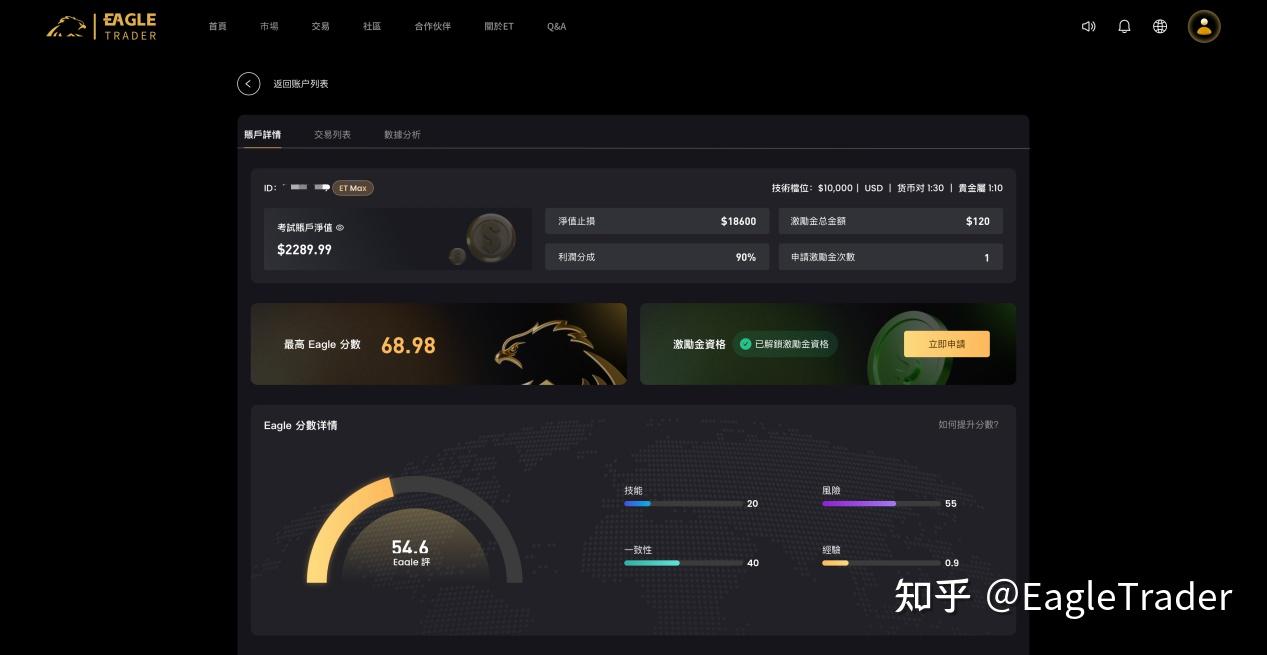
This is also the most easily misunderstood aspect of the self-operated model: it does not make decisions for traders, but uses external rules to expose traders’ deviations in strategy, execution, positions and psychology.
Reviewable assessment environment: take apart the problem
In fact, the loss itself does not explain the problem.
Is it because the strategy has no advantages, or is it not being executed as planned? Is it because the position is too heavy, or is the mentality being affected by the retracement? If you only focus on profit and loss, these problems will be mixed together.
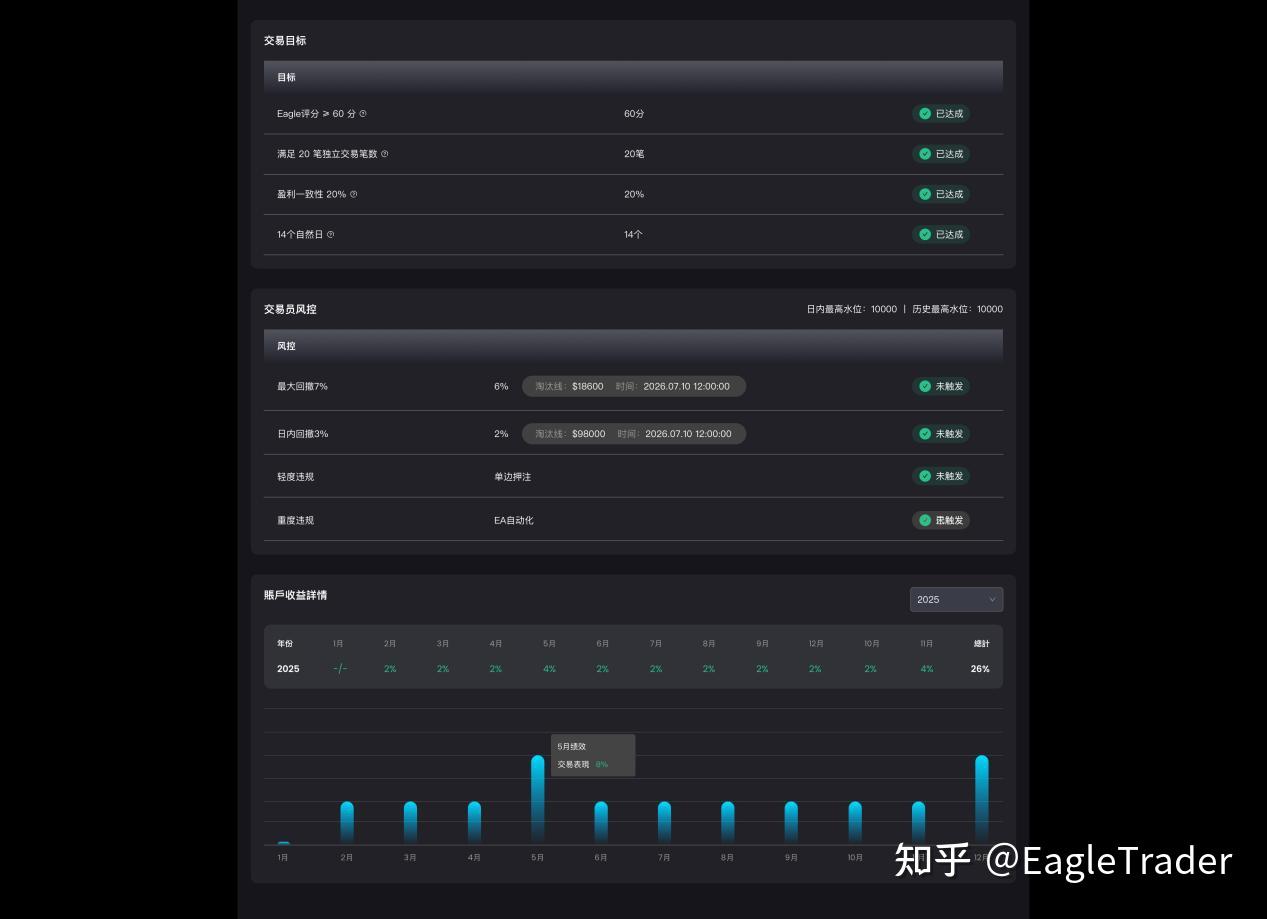
The value of a reviewable assessment environment lies in breaking down the problem: the transaction log records the reasons for entering the market and the basis for reducing positions, the retracement record reflects whether risk control is in place, and the execution deviation reflects the distance between the plan and the action.
Traders can classify problems into four categories: strategy, execution, position, and psychology, and then modify the rules for high-frequency problems and verify them again in subsequent assessments.
It needs to be made clear: passing the assessment is only performance within the rules and does not mean stable profits.
The self-operated model does not represent trading capabilities, nor does it guarantee trading results.
It provides a testing environment with rule constraints and review basis, rather than a promise of income.

For EagleTrader, the self-operated model is more like a regular system physical examination: it is suitable for traders who already have a trading system, but have high trial and error costs with their own funds, and are willing to accept external risk control constraints, insist on recording and review; it is not suitable for those who use self-operated accounts as a “zero-risk money-making” tool, or who try to quickly pass the assessment by taking heavy positions.