
What exactly should be recorded during a trading review? A set of efficient review methods for professional players
- 2026年11月23日
- Posted by: Eagletrader
- Category: News
Many traders review trades every day, but their account performance has not changed.
The problem actually lies in the focus of the review.
If the review is just to stare at the profit and loss of the day and lament, or to find reasonable excuses for your losses, then this kind of review is meaningless in improving your trading ability.
Review is not to explain the previous transaction, but to change the next transaction.
So today EagleTrader wants to share an effective and operational review system with all self-operated traders.
1. Summary of trend characteristics
Every day or at regular intervals, make an objective summary of the trends of the targets you are concerned about (such as gold, major currency pairs, etc.).
Don’t just look at the rise and fall. The market structure can be simply divided into six situations: sharp rise, sharp fall, slow rise, slow fall, wide range shock, and narrow range shock.
When reviewing, it is necessary to clearly record: which period has a clear unilateral trend, which period has repeatedly fluctuated within a specific range, and at which node the long-short power transition occurred.
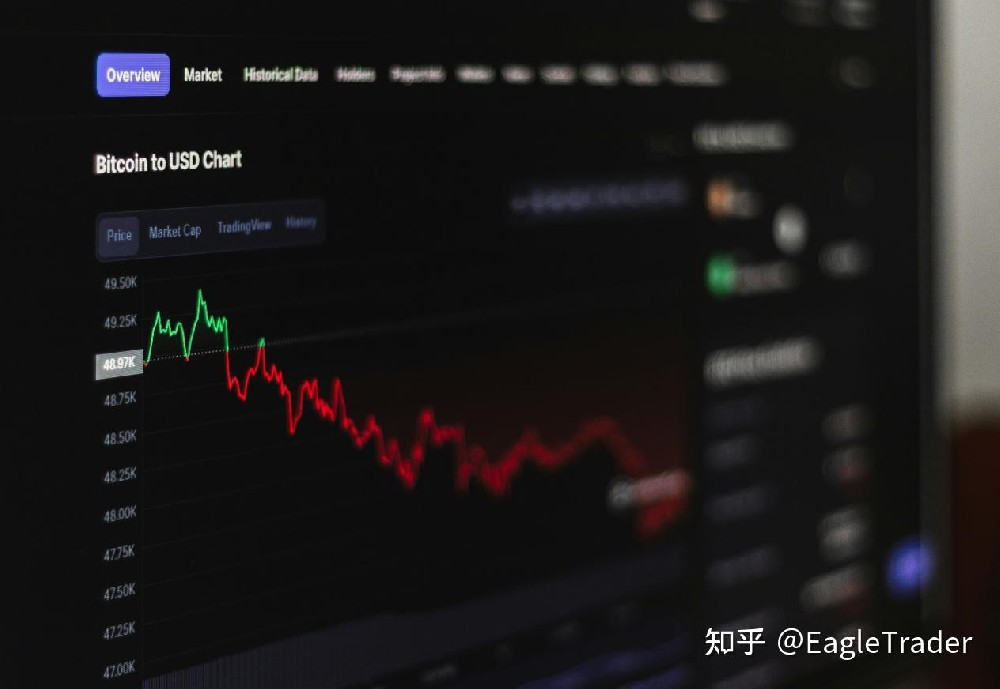
In addition, the evolution patterns between these six situations should also be observed.
For example, narrow fluctuations are usually followed by wide fluctuations or sharp rises and falls;
Rapid rises are often followed by slow declines or high fluctuations.
Persisting in qualitative classification of the market structure for a long time can effectively improve the market sense and allow you to identify the stage of the current market at the first time in the next transaction.
2. Quantification of core data
The profit and loss of a transaction cannot be based solely on subjective feelings, but must be quantified through objective data.
It is recommended to use a professional form tool to import daily transaction records and automatically generate the following core data:
Basic data: profit and loss of the day, transaction type, number of trading rounds, and handling fee ratio.
Performance indicators: winning rate, profit-loss ratio, maximum profit and maximum loss.
Time indicator: the average holding time of profitable transactions and the average holding time of losing transactions.
Through data charts, the full picture of the transaction will be clearly displayed, and the reasons for the losses will also be clear at a glance.
For example: some losses are due to excessive handling fees (indicating that there are too many invalid transactions);
Some have an inverted profit-loss ratio (loss orders take longer than profit orders);
Others are caused by a low winning rate.

From a mathematical logic point of view, if the opening variety and order volume are fixed, the winning rate, odds and trading frequency within a period of time determine the final profit and loss.
The combination of these three varies from person to person:
Low odds combined with high frequency and high winning rate are suitable for the short-term model of accumulating small profits;
High odds combined with low frequency and appropriate winning rate are typical band characteristics.
In the early stages of growth, the winning rate and odds can be increased simultaneously;
But at a certain stage, the two will become a seesaw, and you must make a choice based on your own personality.
3. List of Transaction Behaviors
The core of review is to examine one’s own behavior, not to judge profits and losses.
It is recommended to list common mistakes and correct behaviors one by one and make a “behavior checklist”.
List of wrongdoings:
For example, the stop loss is not strictly stopped or the stop loss is delayed;
Adding positions at will in order to recover losses after a loss;
Frequently opening positions at positions where the system signal is unclear, etc.
Checklist of correct behavior:
For example, stop loss decisively when key resistance/support levels are broken;
When the trend is clear, follow the trend and execute decisively.
Check the form after the market opens every day, check the box if you have achieved it, and put a cross if you have not achieved it.
This review method has nothing to do with the profit and loss results of the day, only whether the trading actions are in compliance with regulations.
By persisting for a long time, you will clearly see the crux of your repeated mistakes, and which correct behaviors can bring about real account growth.
4. Analyze Big Mistakes and Big Rightes
In a specific cycle, orders that cause a large retracement or a large increase in the account need to be analyzed with emphasis.
Big mistakes are often not caused by a single mistake, but by a series of mistakes.
For example, failing to admit your mistake leads to an increase in losses;
Or because the previous floating profit has retraced significantly, the mentality is unbalanced, and thus the next transaction is made to take a heavy position or carry an order that is completely inconsistent with the plan.
The same is true for big pairs. You need to analyze whether it is because the market just fits your trading system, or because you have done an excellent job in rhythm control?

When reviewing these extreme transactions, focus on reviewing the ineffective and efficient markets.
If possible, you can record the transaction process and watch it back.
In view of the market conditions that cause big losses, it is necessary to find out their common characteristics and propose highly feasible solutions.
These measures must be written down and reviewed before trading the next day.
Never give yourself a perfect plan that you can’t execute.
5. Refining advantageous situations
As the review data accumulates, you will find that under certain market structures, your winning rate and profit-loss ratio perform exceptionally well.
Mature traders mostly only do those “advantage situations” that they are very sure of, and give up those opportunities that appear to be profitable but actually have a poor profit-loss ratio.
It is difficult to expand the circle of competence outwards, but appropriately increasing positions within advantageous situations is an effective way to increase profits.
Finally, it needs to be emphasized that review notes need to be reviewed frequently.
Trading is a dynamic and cyclical process. Reading the same trading notes at different stages will often bring completely different inspirations.