
Why do master traders also lose money? Peter Lynch reveals the core truth of trading in one sentence
- 2026年7月7日
- Posted by: Eagletrader
- Category: News
For traders who have just entered the market, the most common goal is to continuously improve their winning rate.
They study various technical indicators, look for more precise entry points, and hope to make every transaction as profitable as possible. They even believe that only by achieving “almost no loss” can they have sufficient mature trading capabilities.
However, the famous American fund manager Peter Lynch once said: “In this industry, if you are a master, you may be right six times out of ten transactions.
But you will never be right nine times out of ten transactions.”
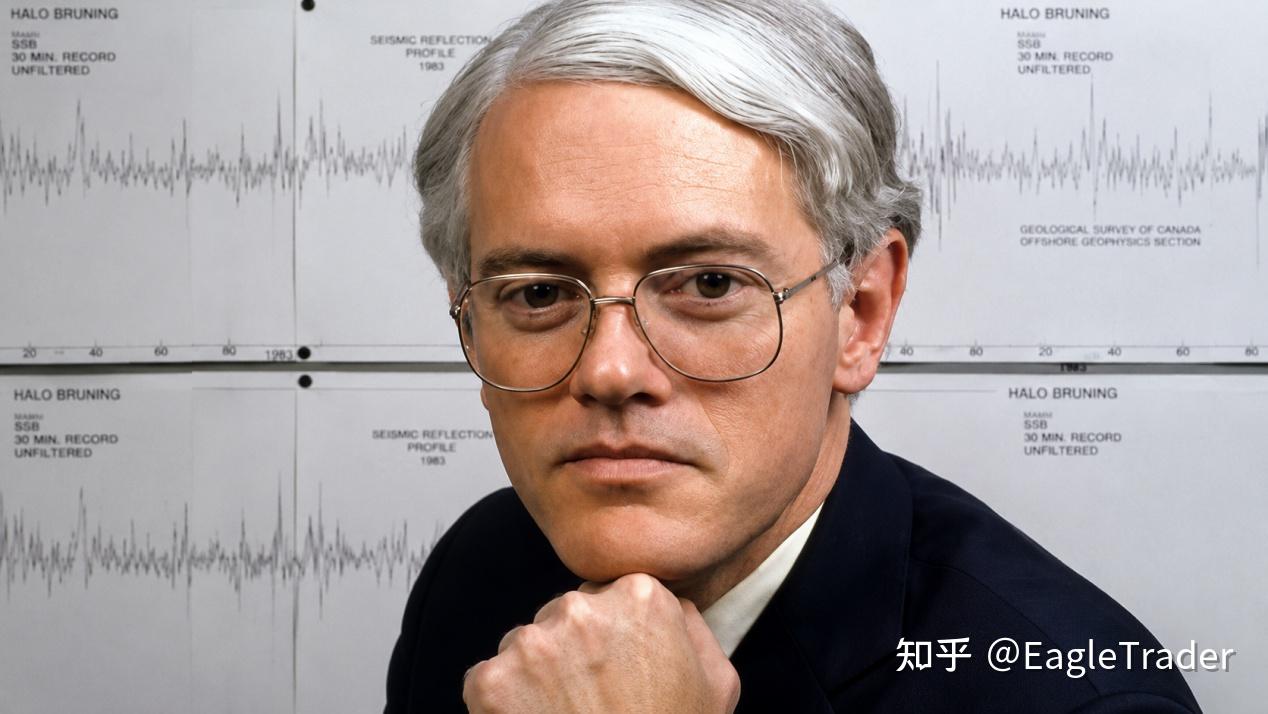
This sentence reveals a fact that many people will not understand until they have experienced countless transactions – trading itself is a matter full of uncertainty.
The market is affected by multiple factors such as economic data, policy changes, emergencies, and market sentiment. No analysis method can guarantee that every judgment is correct.
Therefore, for traders, instead of blindly pursuing a higher winning rate, it is more important to establish a trading system that can be executed stably in the long term.
A high winning rate does not mean that the account will surely grow steadily
Many traders tend to equate winning rate with profitability. In fact, the factors that determine the final performance of an account go far beyond winning percentage.
Suppose both traders complete 10 trades. The first trader made 6 correct trades and made a profit of $300 per trade; he made 4 wrong trades and lost $100 per trade. In the end, the account still received a net profit of $1,400.
Although another trader made 8 profitable transactions, because he failed to stop his losses in time for two losses, his single loss far exceeded his previous profit, and his account ended up with a loss.
From this simple example, we can find that account performance is jointly affected by many factors such as winning rate, profit-loss ratio, and risk control, and fund management and risk control are important links connecting these factors.
This is why many professional traders, when reviewing, not only focus on whether the transaction is profitable, but also simultaneously analyze whether the position control is reasonable, whether the stop loss execution is in place, and whether the overall risk is in line with their own trading plan.
Risk control determines how far the trading system can go
During the trading process, every loss is inevitable.
What really needs to be focused on is how much impact this loss will have on the account.
Many traders did not suffer sharp retracements due to wrong market judgments, but constantly revised their original plans when faced with losses.
The originally set stop loss was cancelled, and the position continued to increase due to emotions, hoping to recover the losses through a rebound;
After continuous profits, the risk was amplified due to overconfidence, and the last transaction gave up the previously accumulated profits.
These situations are not uncommon in the market.
The significance of risk control is not to reduce the number of losses, but to keep each loss within an acceptable range so that the trading plan can be continuously executed without disrupting the entire trading rhythm due to an unexpected fluctuation.
For a mature trading system, risk management always runs through every aspect of the transaction.
From determining risks before entering the market, to controlling positions during the transaction, to review and analysis after exiting the market, every step will affect the long-term performance of the account.
Risk control needs to be implemented by rules
Many traders know the importance of fund management and risk control, but not many people actually do it.
The reason is that market fluctuations not only test trading ability, but also continuously amplify trading emotions.
When facing a loss, you temporarily cancel the stop loss and continue to add positions to spread the cost; after continuous profits, you enlarge the position due to overconfidence… These situations often make the originally formulated trading plan gradually lose its binding force.
Therefore, more and more professional traders will take the initiative to establish a clear set of trading rules, including position management, maximum drawdown, single risk and stop loss discipline, etc., so that every transaction can be carried out within a controllable range.
This is also the important significance of the existence of proprietary trading assessment.
When many people are new to proprietary trading, they feel that the requirements such as drawdown limits and risk rules are too strict.
However, as trading experience continues to accumulate, more and more traders are beginning to realize that these rules are not intended to restrict trading, but to help traders develop more stable fund management awareness and risk control capabilities.
In EagleTrader, the proprietary trading assessment not only focuses on the trading results, but also on the trading process. Account management, risk control, fund management and trading discipline are all important components of the assessment system.
We also hope that traders can continuously verify their trading systems through repeated assessments and gradually establish more standardized trading habits so that their trading abilities can withstand the test of different market environments.
This is also an important reason why EagleTrader always insists on building a growth-oriented proprietary trading.
The market is always full of changes, and no one can guarantee that every judgment is correct.
When traders start to shift their focus from “how to improve the winning rate” to “how to manage risks”, their trading thinking will also change.
EagleTrader hopes that every trader will understand that trading not only focuses on results, but also on long-term stability.